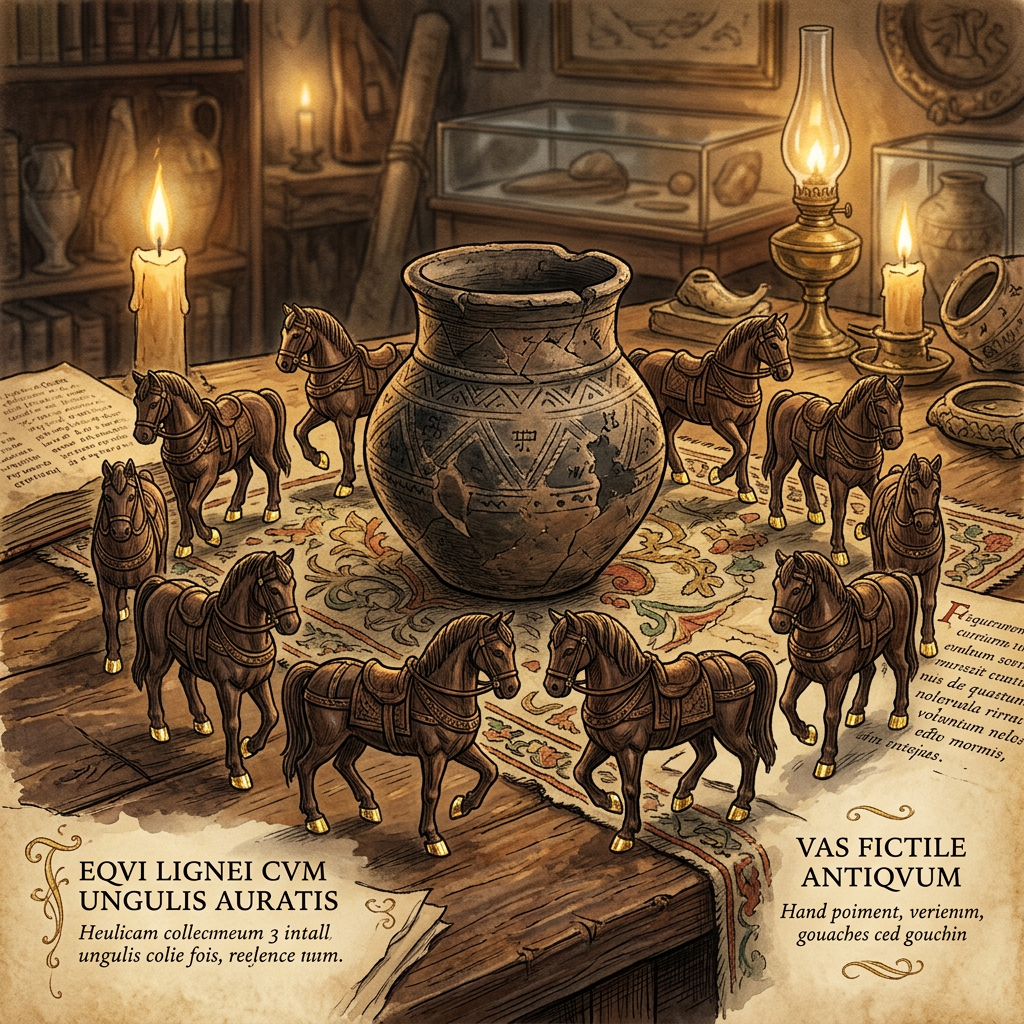
New excavations in the Zhetysu region of Kazakhstan have brought to light a collection of gold-hoofed wooden horse figurines, buried within a Saka-era ceremonial mound. These miniature carvings, dating to the 5th century BCE, appear to be votive offerings for an early equinox festival. The presence of these artifacts suggests that the roots of Nauryz, the Persian-influenced New Year, may have deeper, indigenous nomadic origins linked to the blessing of the herd.
Analysis of the surrounding soil revealed residues of fermented mare's milk, or koumiss, indicating that large-scale feasting accompanied the ritual deposition of these horses. Dr. Yerlan Smailov, lead archaeologist, stated that the 'gold-hoofed' horses likely represented the Solar Steed, a deity responsible for bringing the first grass of spring, a central theme in modern Kazakh cultural heritage.