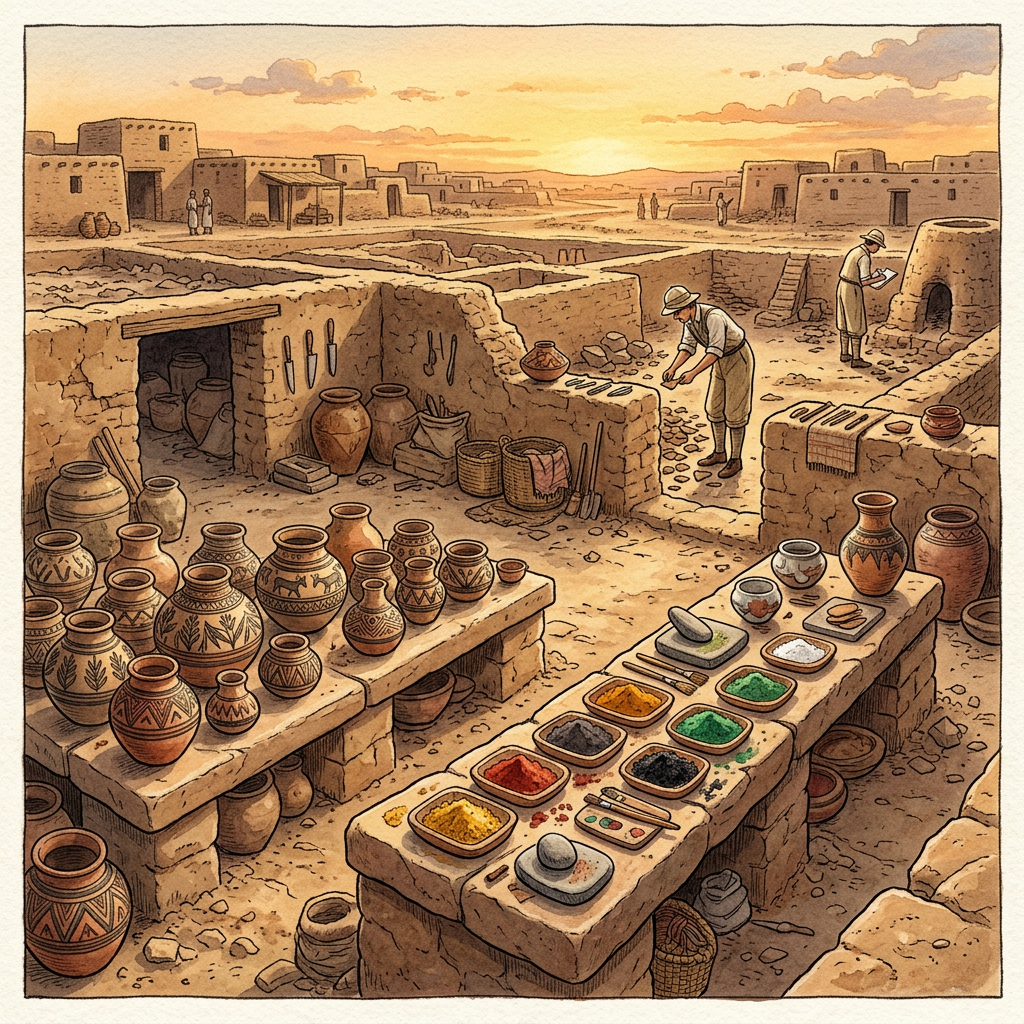
Excavations at a newly identified Indus Valley Civilization outpost in Rajasthan have revealed a 4,500-year-old pottery-painting studio. The site offers a unique glimpse into the specialized artistic traditions of the mature Harappan period. Archaeologists discovered multiple terracotta pigment trays still containing residues of red ochre, black manganese, and rare white gypsum used to create the iconic geometric and floral patterns found on Harappan ceramics.
The studio features several stone workbenches and a dedicated area for the fine-tuning of bone brushes and styluses. This discovery confirms that pottery production was not just a utilitarian craft but a highly organized industrial art form with specific zones dedicated to decoration and glazing. The presence of unfinished jars decorated with experimental motifs suggests that this site may have been a training ground for master artisans traveling between Mohenjo-Daro and the eastern frontiers.