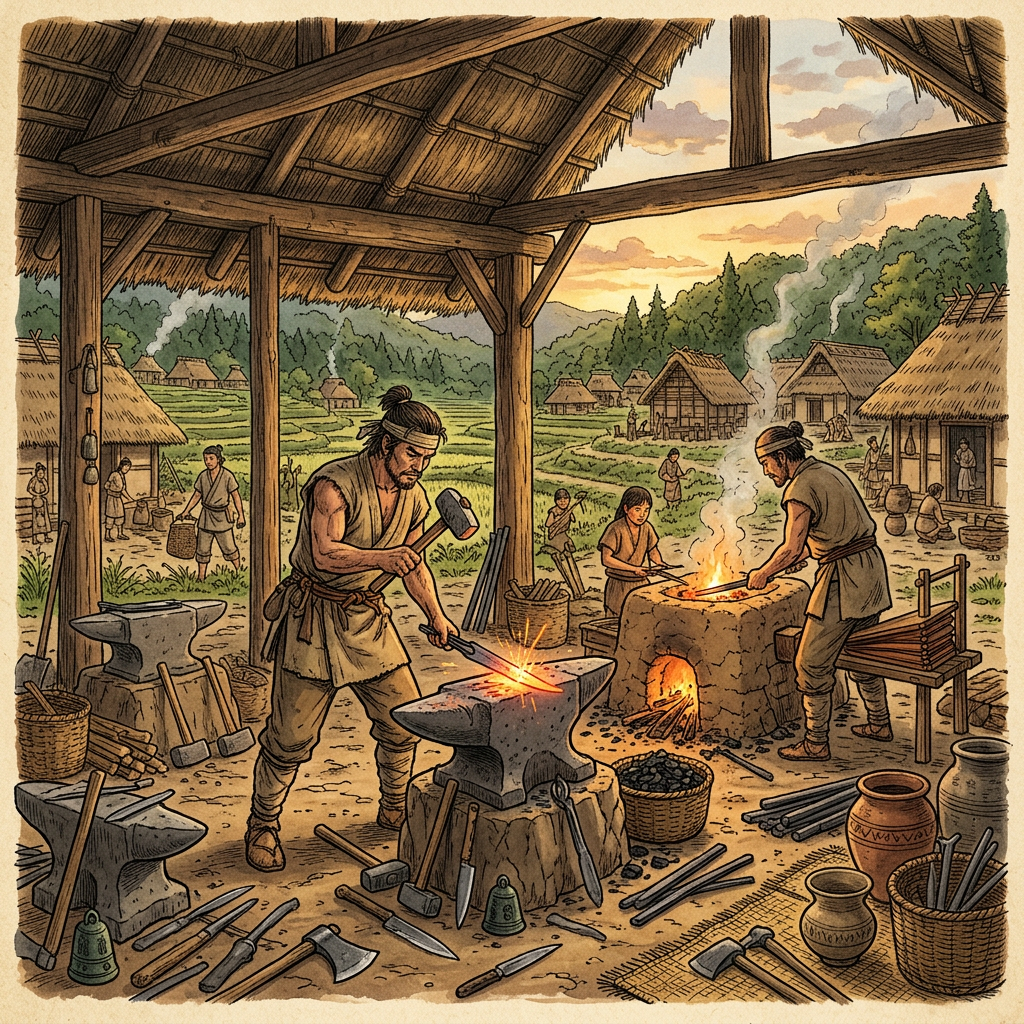
In a significant find for Japanese archaeology, a 2,000-year-old iron-working facility has been unearthed in northern Kyushu. Dating to the late Yayoi Period, the site was a center for the high-precision manufacturing of iron plowshares and harvesting sickles, which were instrumental in the expansion of wet-rice cultivation across the archipelago. The workshop contains several specialized anvils and water-cooling troughs designed for temper-hardening metal.
Excavations have revealed that the facility was part of a larger planned settlement with a clear division between residential and industrial zones. The presence of imported iron ore from the Korean Peninsula suggests that this workshop was a key node in a trans-marine trade network that brought advanced technology to ancient Japan. The site also yielded a collection of standardized stone molds for iron casting, indicating an early move toward mass production of essential farming equipment.