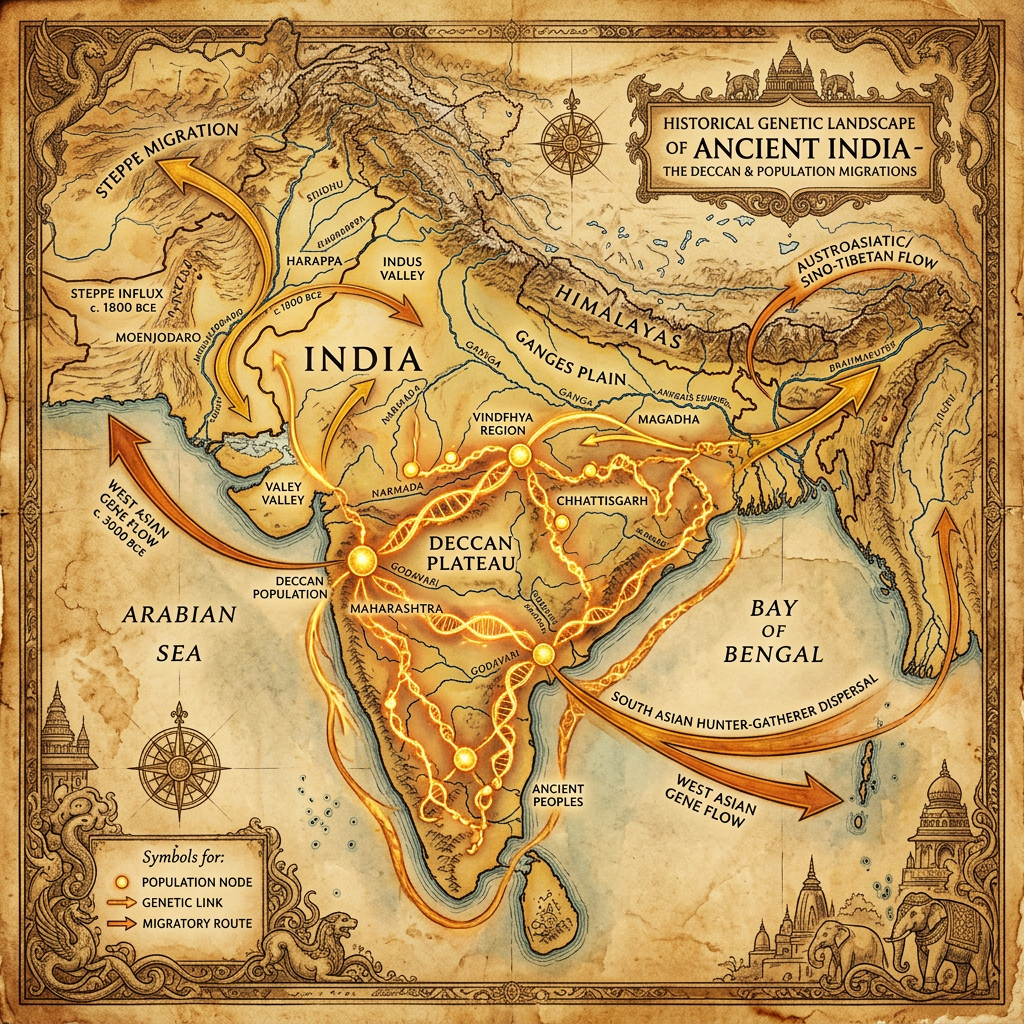
A large-scale genomic study of remains discovered at the intersection of the Aravali and Deccan geological zones has identified a previously unknown 'Ghost Lineage' of Pleistocene hunter-gatherers. This population possessed unique genetic markers for heavy-metal sequestration, allowing them to inhabit regions with naturally high levels of arsenic and lead due to tectonic activity.
The research, appearing in Anthropological Science, indicates that this lineage branched off from the main South Asian hunter-gatherer stock approximately 35,000 years ago. Their genetic signature is notably absent in modern urban populations but survives in small pockets of indigenous communities in Central India. The study highlights the role of geological 'toxicity zones' in driving human genetic diversity and specialized environmental adaptation.