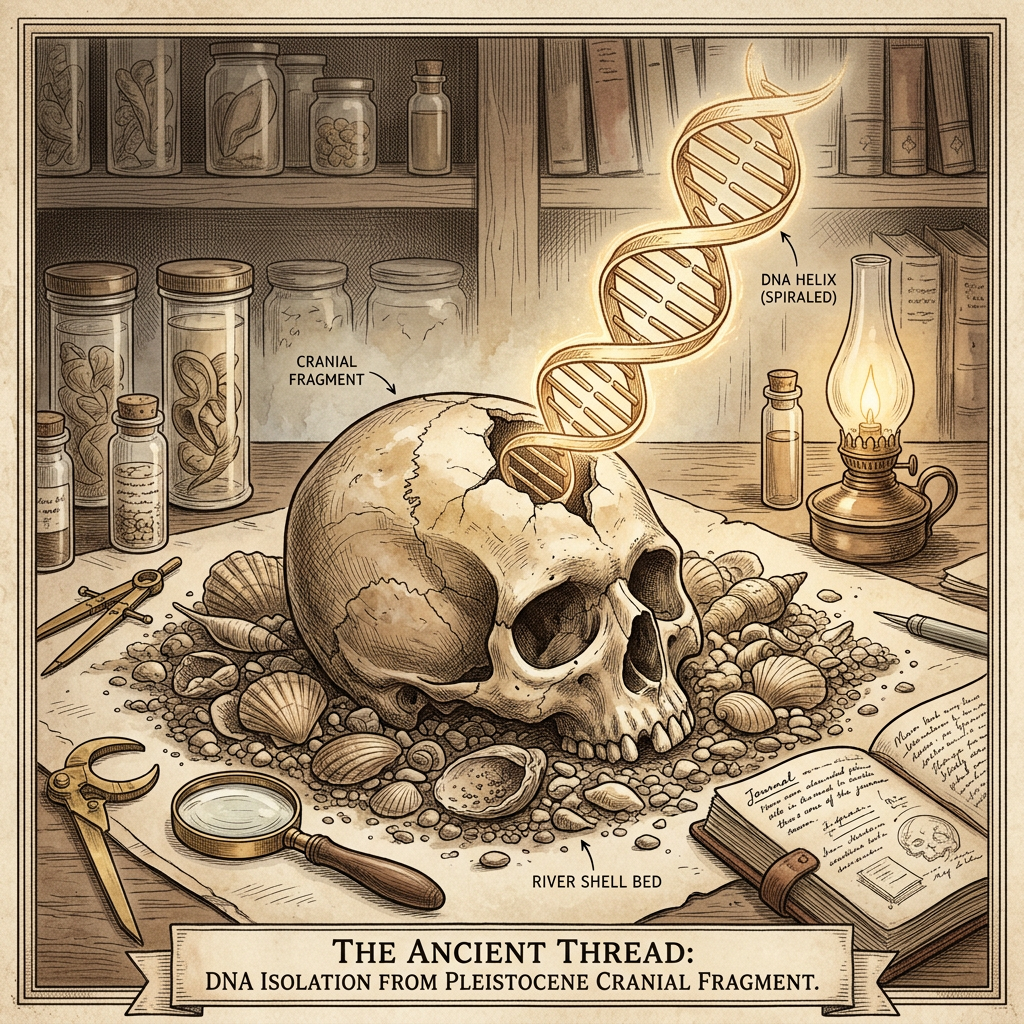
New paleogenomic research conducted on human remains found near Pulicat Lake in Southern India has identified a unique genetic adaptation that allowed early Holocene hunter-gatherers to thrive in environments with high levels of cyanobacterial toxins. The study, published this week in Nature Genetics & Archaeology, sequences the oldest high-coverage genome from the Coromandel Coast to date.
The analysis revealed a specific mutation in the CYP2D6 gene cluster, which enhanced the liver's ability to neutralize microcystins common in brackish water blooms. This genetic trait suggests that ancient populations were under intense selective pressure to adapt to the unique ecological challenges of estuarine ecosystems. These findings provide a new window into how prehistoric Indians managed nutritional and environmental stress long before the advent of settled agriculture.