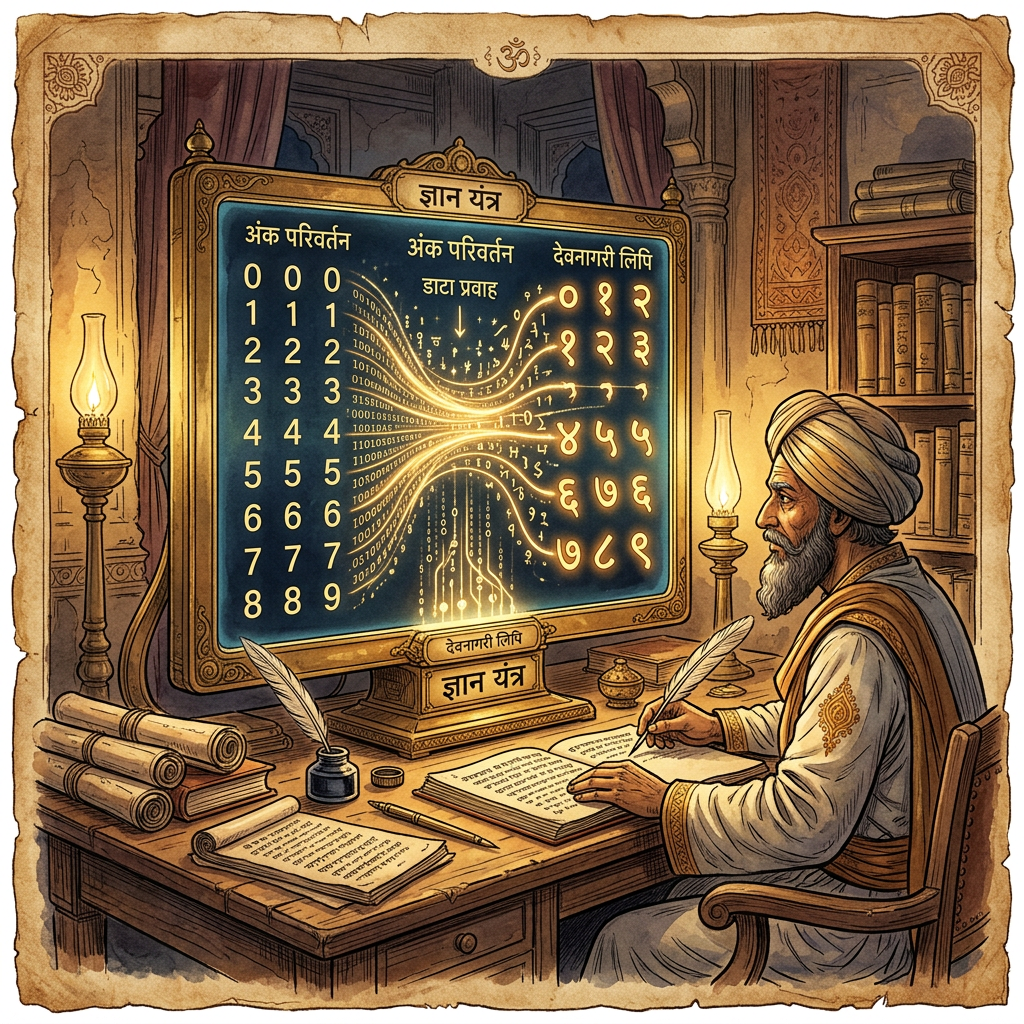
New research into regional variants of Narayana Pandita's 12th-century treatise, the Ganita-Kaumudi, has uncovered evidence of advanced mathematical concepts resembling modern non-linear matrix factorization. A team of mathematicians and Sanskritists found that the text provides iterative methods for decomposing large numerical arrays to solve complex logistical problems in trade and architectural planning.
The study demonstrates that these medieval scholars were utilizing combinatorial logic and precursor concepts to linear algebra that were previously thought to be 19th-century developments. By digitizing the manuscript's numerical tables and running them through modern solvers, the researchers confirmed that the ancient algorithms achieve near-identical results to modern optimization software, proving a high degree of mathematical maturity.