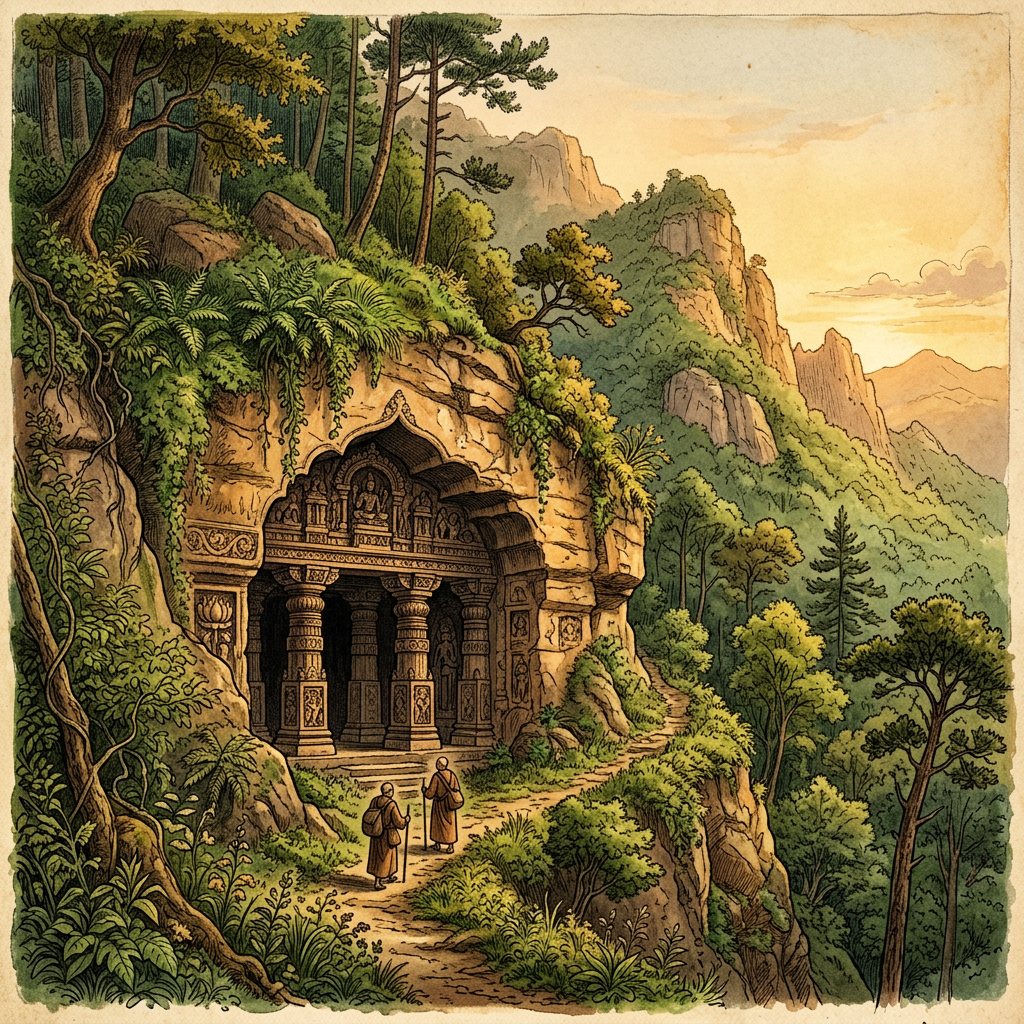
Deep within a remote gorge of the Sahyadri mountains, a team of researchers has identified a rare rock-cut shrine attributed to the Traikutaka Dynasty. Dated to the mid-5th century CE, the sanctuary represents a critical 'missing link' in the evolution of cave architecture between the earlier Satavahana caves and the later world-renowned sites at Ellora. The shrine features a central hall with eight octagonal pillars and a semi-circular apse containing an unfinished stupa, indicating a potential overlap between Buddhist and Brahmanical patronage during the era.
The most striking feature of the find is a series of faded but identifiable mineral frescoes on the ceiling, depicting celestial beings in a style that predates the Vakataka school of Ajanta. Local authorities have cordoned off the area to protect the fragile site from humidity and unauthorized access. This discovery confirms the Traikutaka influence extended much further inland than previously thought, highlighting their role in the cultural landscape of the Western Deccan during the post-Gupta transition.