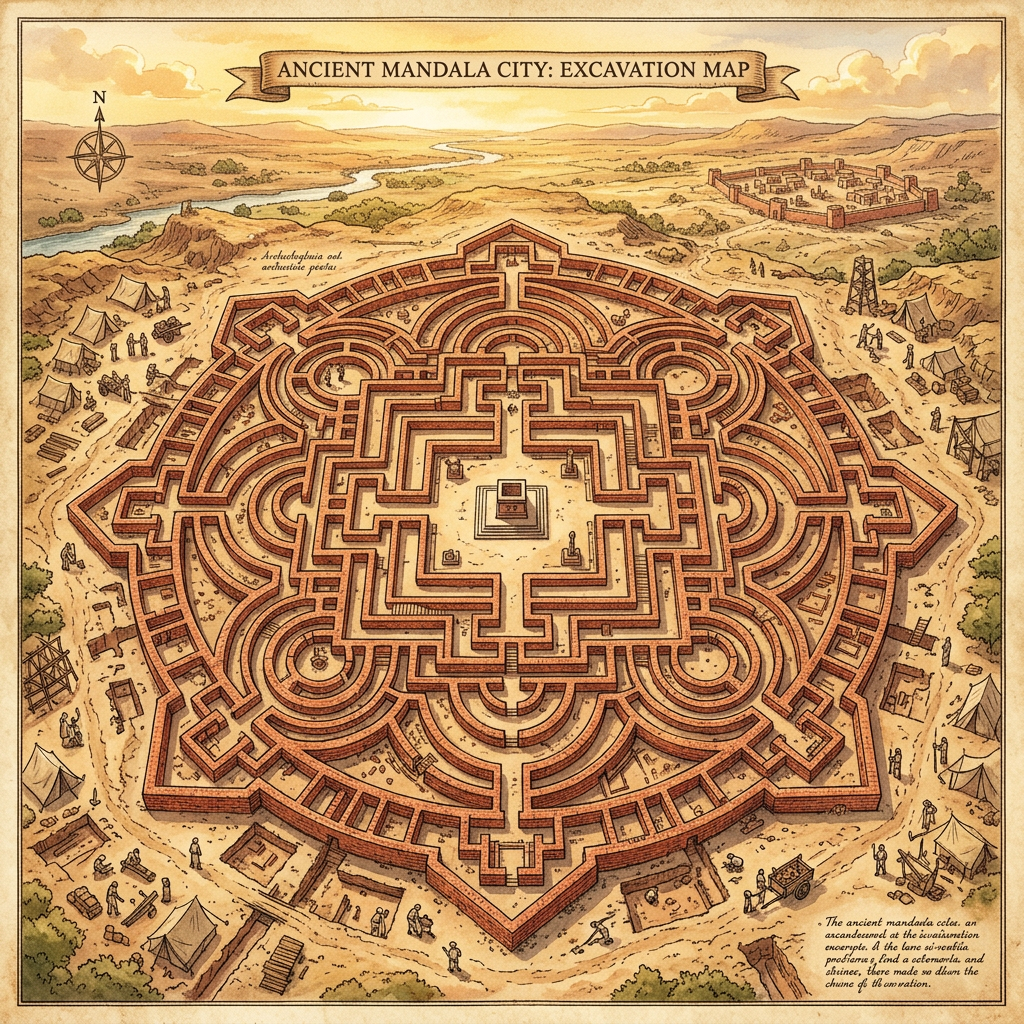
A breakthrough excavation in the Comilla district of Bangladesh has revealed the foundations of a 10th-century Buddhist Vihara (monastery) and temple complex belonging to the late Khadga Dynasty. The most significant discovery at the site is a perfectly preserved floor made of polychrome brickwork, arranged in the precise shape of a Vajradhatu Mandala. This architectural feature suggests that the site was a center for early Tantric Buddhist practices, which flourished in the region before the rise of the Pala Empire's major universities.
Alongside the monastery walls, archaeologists found several bronze votive seals and a series of terracotta plaques depicting Buddhist deities in rare local iconographic forms. The monastery's unique drainage system, which utilizes terracotta pipes to channel water away from the ritual spaces, highlights the advanced urban planning of the Khadga rulers. Efforts are now underway by the Bangladesh Department of Archaeology to establish a site museum to preserve the fragile brick mandala in situ.