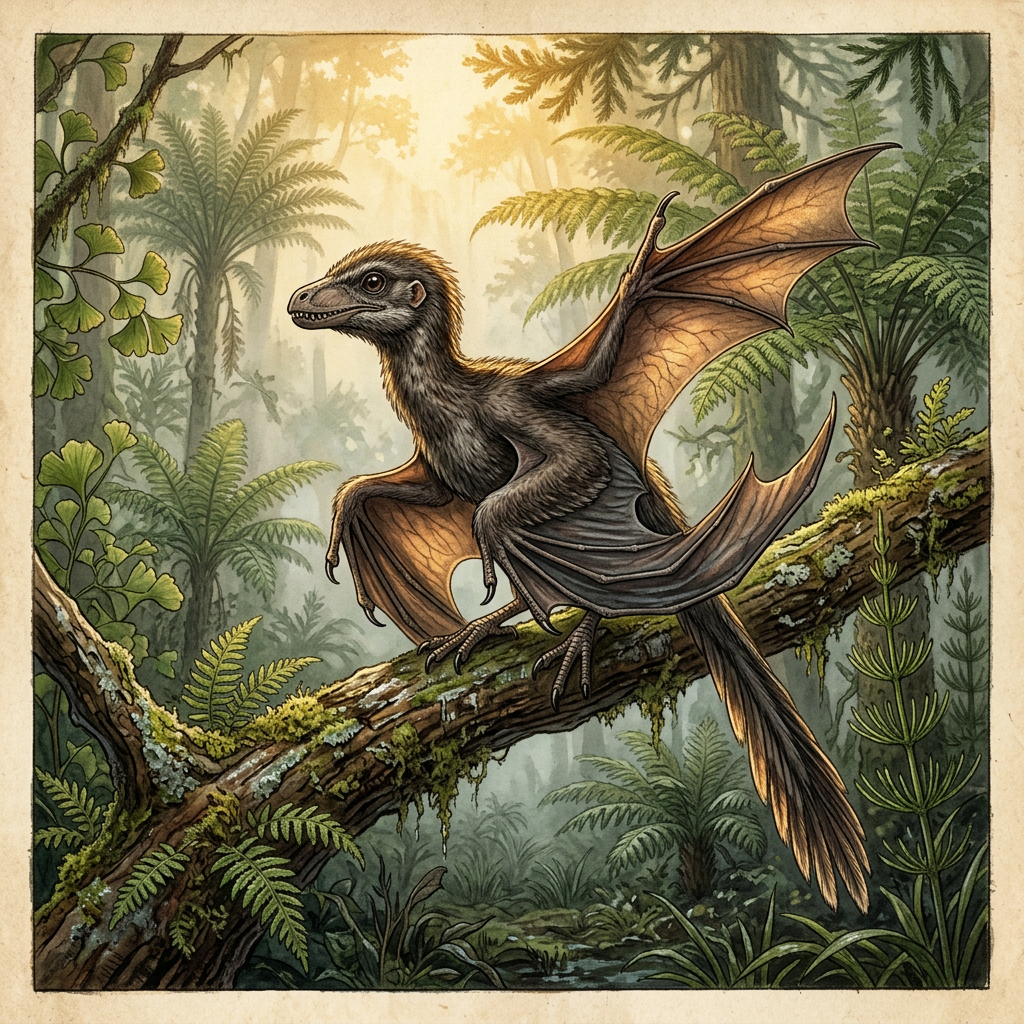
Palaeontologists have unveiled the fossilized remains of a previously unknown species of dinosaur that lived 160 million years ago in the forests of what is now Inner Mongolia. The small, squirrel-sized creature, named Pteropteryx mongoliensis, possessed elongated finger bones that supported a leathery membrane, similar to the wings of modern bats.
This discovery provides crucial evidence for the independent evolution of flight in the dinosaur lineage. Unlike the feathered wings of birds, this species utilized a gliding mechanism to move between trees, highlighting the ecological diversity of the Jurassic period and the various biological experiments that occurred before the rise of avian flight.