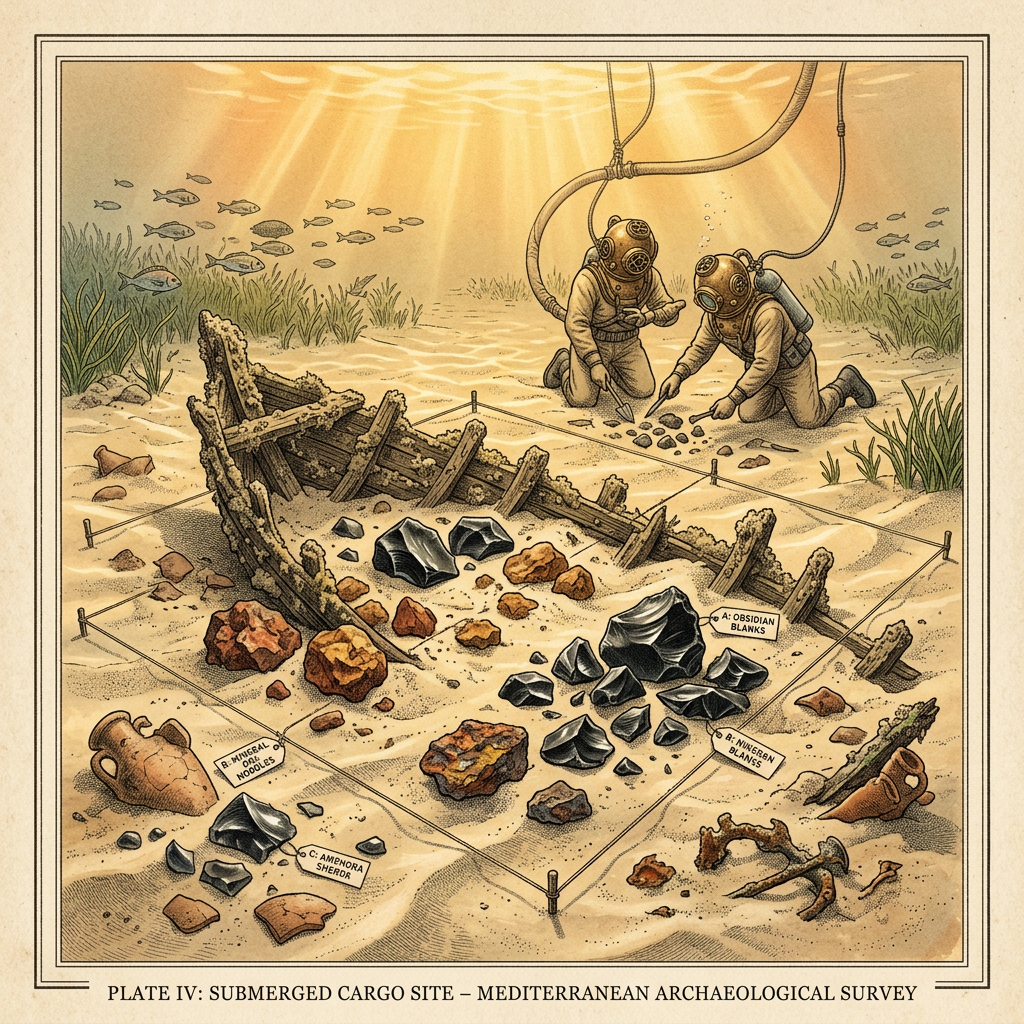
New underwater surveys in the Western Mediterranean have uncovered evidence of a previously unknown Neolithic maritime trade route. Using advanced autonomous underwater vehicles (AUVs), researchers located several cargo clusters containing Sardinian obsidian and North African cinnabar. The findings suggest that seafaring communities were crossing the open sea as early as the 4th millennium BCE to exchange high-value minerals for ritual and decorative use.
This 'Obsidian and Cinnabar' seaway provides new insights into the complexity of prehistoric logistics and the level of navigational skill possessed by early Mediterranean cultures. The study, published in the Journal of Maritime Archaeology, reveals that these materials were transported in skin-covered boats, linking the mineral-rich mountains of Sardinia directly to the coastal hubs of the Maghreb. This discovery challenges existing theories regarding the isolation of early island societies.