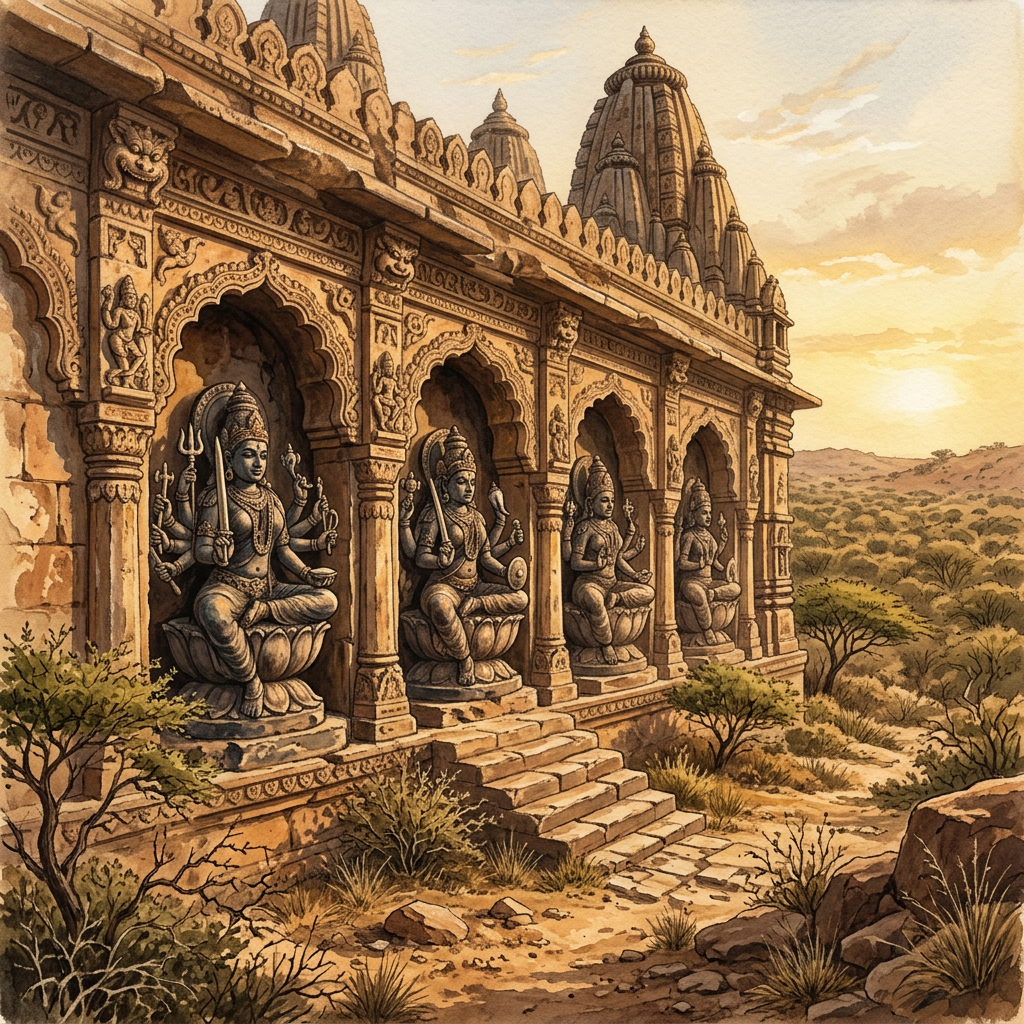
Researchers in the Angul district of Odisha have identified a lost temple complex belonging to the Bhauma-Kara dynasty, which ruled the region during the 9th century. The site was discovered during a survey of ancient trade routes and is notable for its unique set of eight Ashta-Bhairava statues found in situ within their original wall niches. These fierce manifestations of Shiva provide rare evidence of early Tantric influences in mainstream Odissan temple architecture.
The temple ruins, though partially collapsed, retain a high level of artistic detail in the surviving stone panels, which depict maritime voyages and royal processions. Scholars believe the temple served as a primary religious center for a local administrative unit during the Bhauma-Kara era. The presence of a small monolithic temple annex dedicated to a female deity suggests a complex syncretic worship environment typical of the medieval period in Eastern India.
The Odisha State Archaeology Department has initiated a project to reassemble the fallen stone blocks and restore the temple's original Jagamohana (hall). This discovery adds a new chapter to the state's rich architectural history, showcasing a transition from early rock-cut styles to the massive structural temples of the later Ganga period. Documentation of the inscribed stone lintels is currently being finalized for publication in international journals.