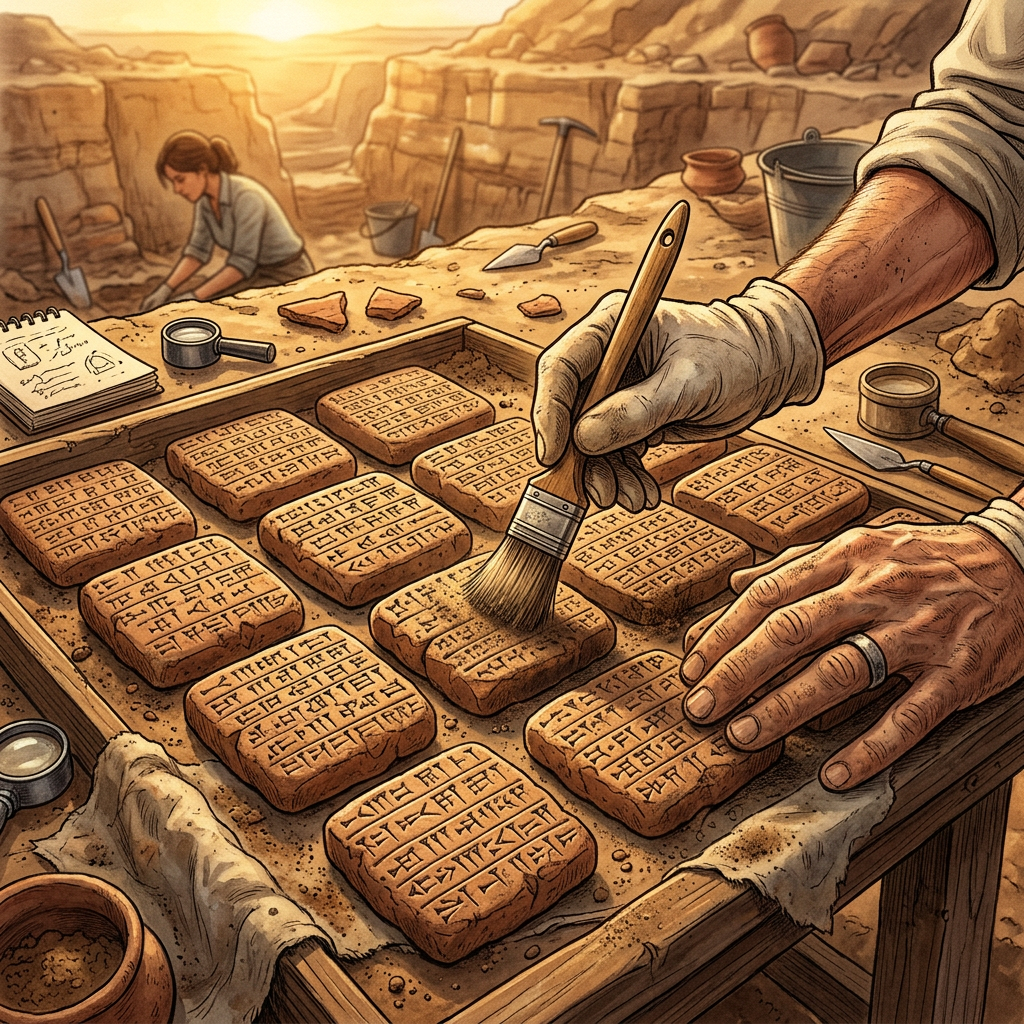
A significant excavation in the Kurukshetra region of Haryana has yielded a cache of terracotta tablets inscribed in an early form of Sanskrit. Dated to the late 5th century BCE, these tablets contain the Soma-Vritti, a treatise exploring the philosophical implications of ritual-induced states of consciousness. The text moves beyond mere ritual instructions to offer a metaphysical critique of joy, arguing that spiritual ecstasy is a direct perception of the cosmic order (Rta).
Dr. Ananya Sharma, the lead archaeologist, stated that the find is unique because it treats ritual practice as an epistemological tool rather than just a religious duty. The tablets describe how the 'ritual mind' can bypass sensory limitations to perceive the underlying unity of the material and spiritual worlds. This discovery provides fresh evidence of the intellectual rigor present in the transition between the Vedic and Puranic periods.