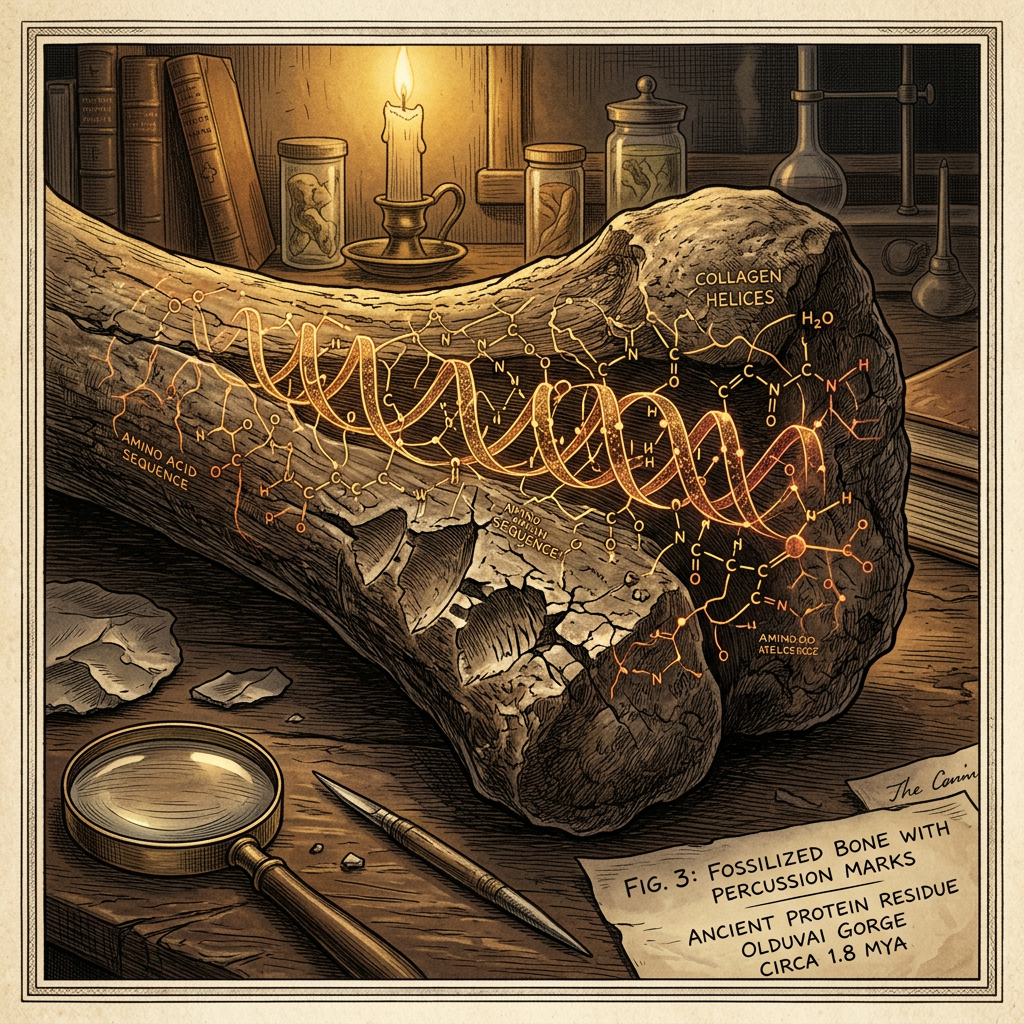
A study published in Evolutionary Anthropology on April 5, 2026, has revealed new insights into the dietary habits of Homo heidelbergensis using high-resolution proteomic analysis. The researchers examined protein residues on stone tool marks found on skeletal remains from the Atapuerca Mountains, identifying specific lipid-binding proteins associated with the systematic extraction of high-energy bone marrow.
This research confirms that early humans in the Middle Pleistocene possessed a granular understanding of nutritional density, utilizing specialized toolkits to access calorie-rich marrow. The findings challenge the notion that such behaviors were opportunistic, suggesting instead that marrow harvesting was a central, planned component of their survival strategy during periods of seasonal resource scarcity in the European interior.