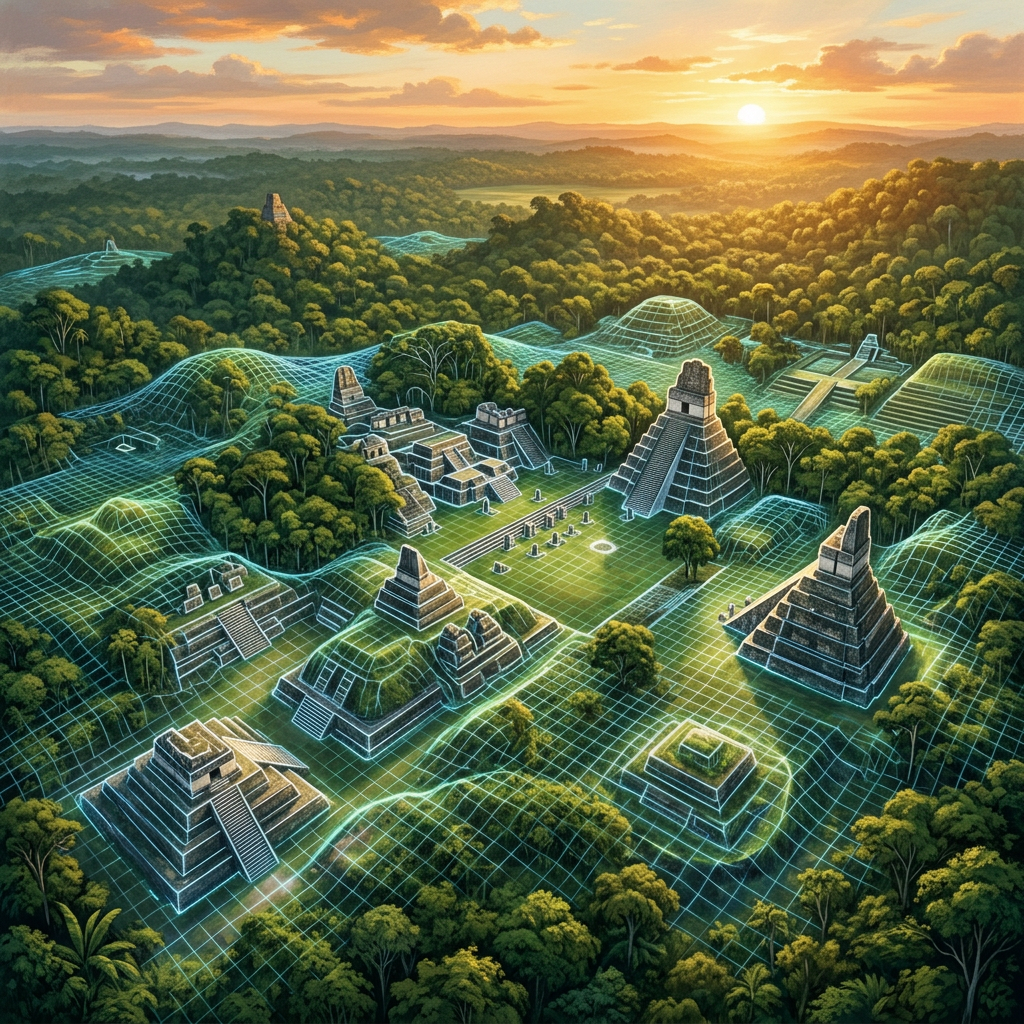
Archaeologists utilizing high-resolution LiDAR technology have announced the discovery of a sprawling 1,500-year-old urban network hidden beneath the dense canopies of the Chiapas jungle in southern Mexico. The site, tentatively named 'Xoltan,' reveals a sophisticated grid system reminiscent of the great metropolis of Teotihuacan, suggesting a much deeper cultural and political influence from Central Mexico than previously theorized for this region.
The mapping has identified over 3,000 individual structures, including monumental pyramids, residential complexes, and a unique series of interconnected causeways. Preliminary ground surveys have already yielded high-status ceramics and obsidian tools, indicating that Xoltan served as a major trade hub during the Early Classic period. This finding challenges the traditional boundaries of regional power during the transition between the Pre-Classic and Classic Maya eras.