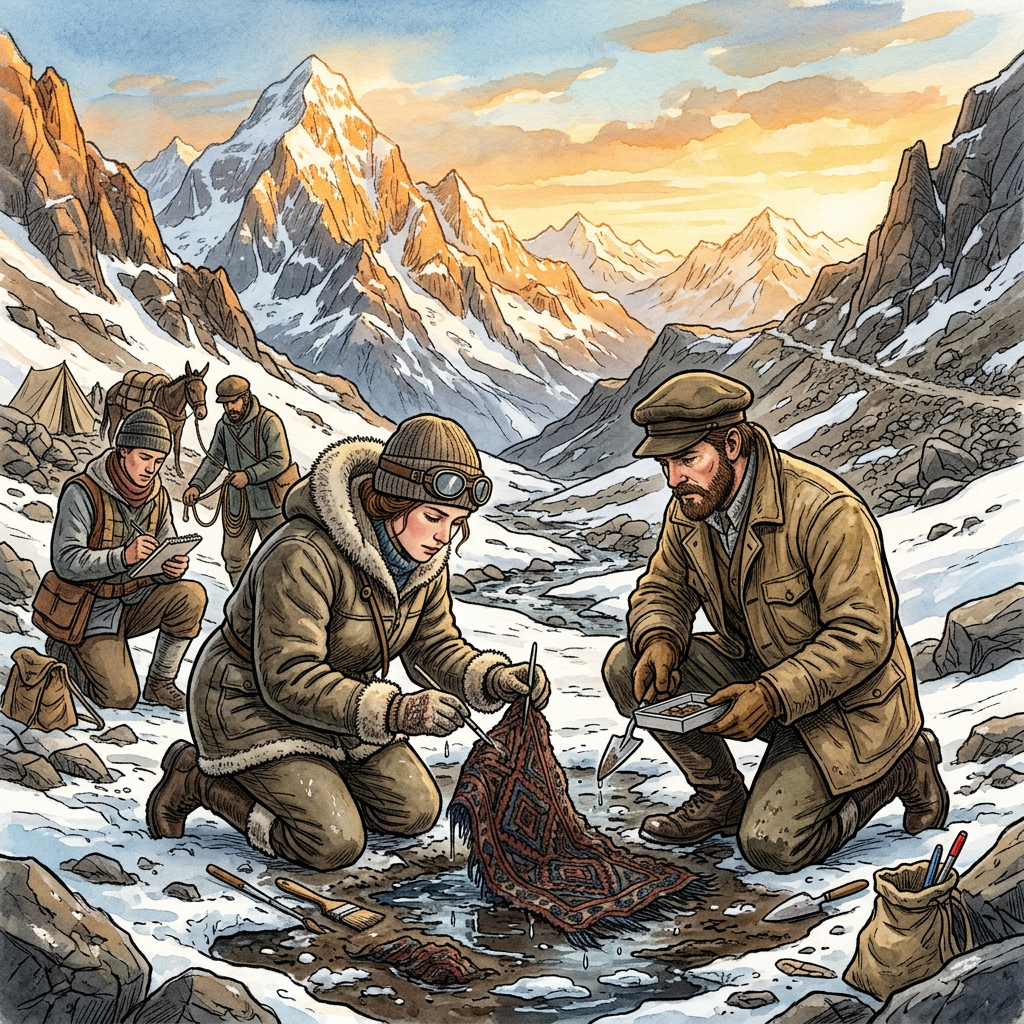
Rapidly retreating ice in the Tien Shan Mountains has led to the discovery of remarkably preserved mountain-pass shelters used by travelers on the Silk Road during the 2nd century CE. The extreme cold and dry conditions have kept organic materials intact, including patterned woolen tunics, leather boots, and wooden pack saddles. These artifacts provide a rare, intimate glimpse into the daily lives and logistical challenges faced by ancient merchants traversing the high-altitude 'Sky Road' between China and Central Asia.
Archaeologists working at the site believe the shelters were part of a coordinated network designed to protect caravans from sudden blizzards. Genomic analysis of the fibers in the recovered textiles reveals a complex supply chain, with wool originating from breeds native to the Iranian plateau, while the dyes were sourced from the Indian subcontinent. This discovery underscores the role of climate archaeology in recovering history that would otherwise be lost to decay in warmer, lower-altitude environments.