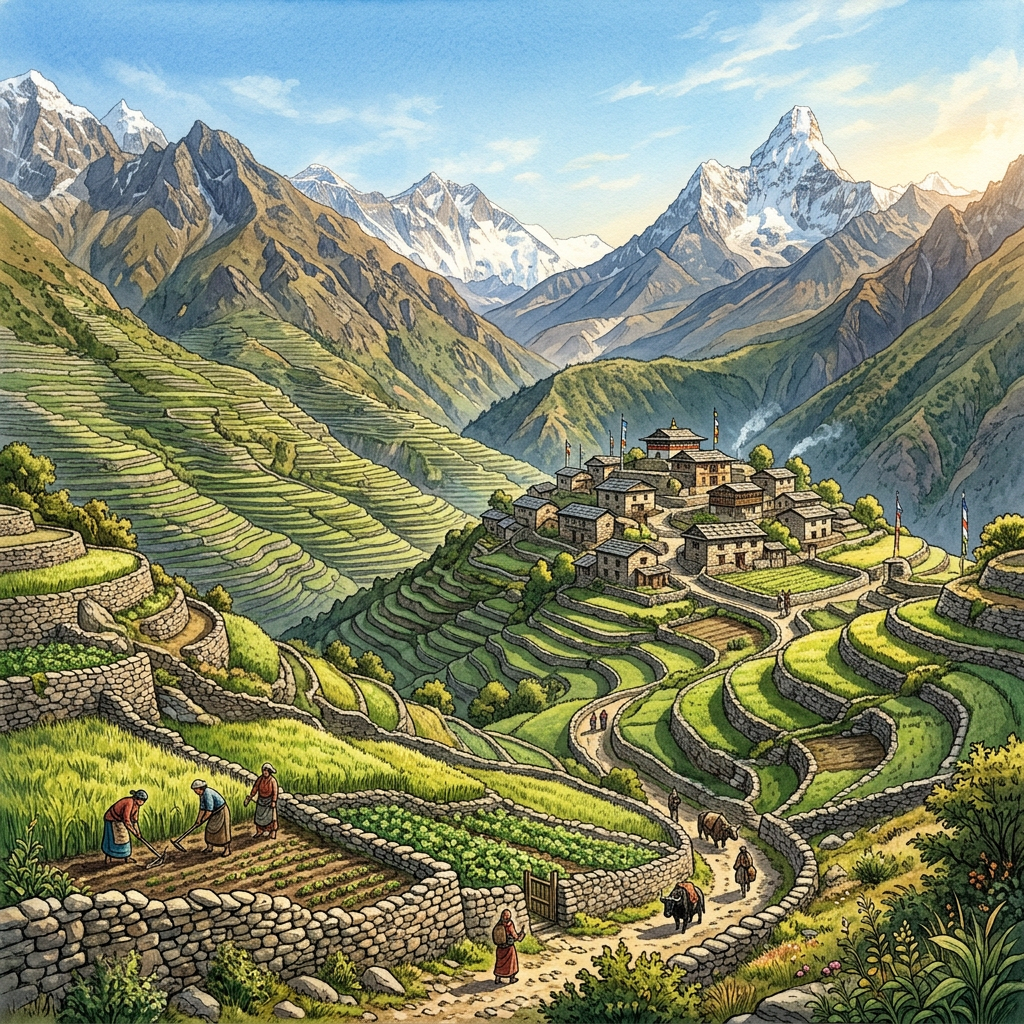
In a landmark session today, UNESCO formally inscribed the Traditional High-Altitude Terraced Barley-Gardens of the Tibetan Plateau as a World Heritage site. This designation recognizes the unique 1,500-year-old agricultural systems developed by indigenous communities to thrive in some of the world's most extreme environments. The site comprises hundreds of interconnected stone terraces that utilize a sophisticated network of glacial-melt irrigation channels, demonstrating an unparalleled mastery of water management and soil conservation.
UNESCO officials noted that these gardens are not merely historical relics but living landscapes that continue to provide food security and maintain genetic diversity in crops. The inscription includes an emergency preservation grant intended to help local farmers adapt these ancient structures to the rapidly shifting weather patterns caused by climate change. This move is seen as a critical step in preserving the intangible cultural heritage associated with the songs, rituals, and collective labor practices that have sustained the terraces for centuries.