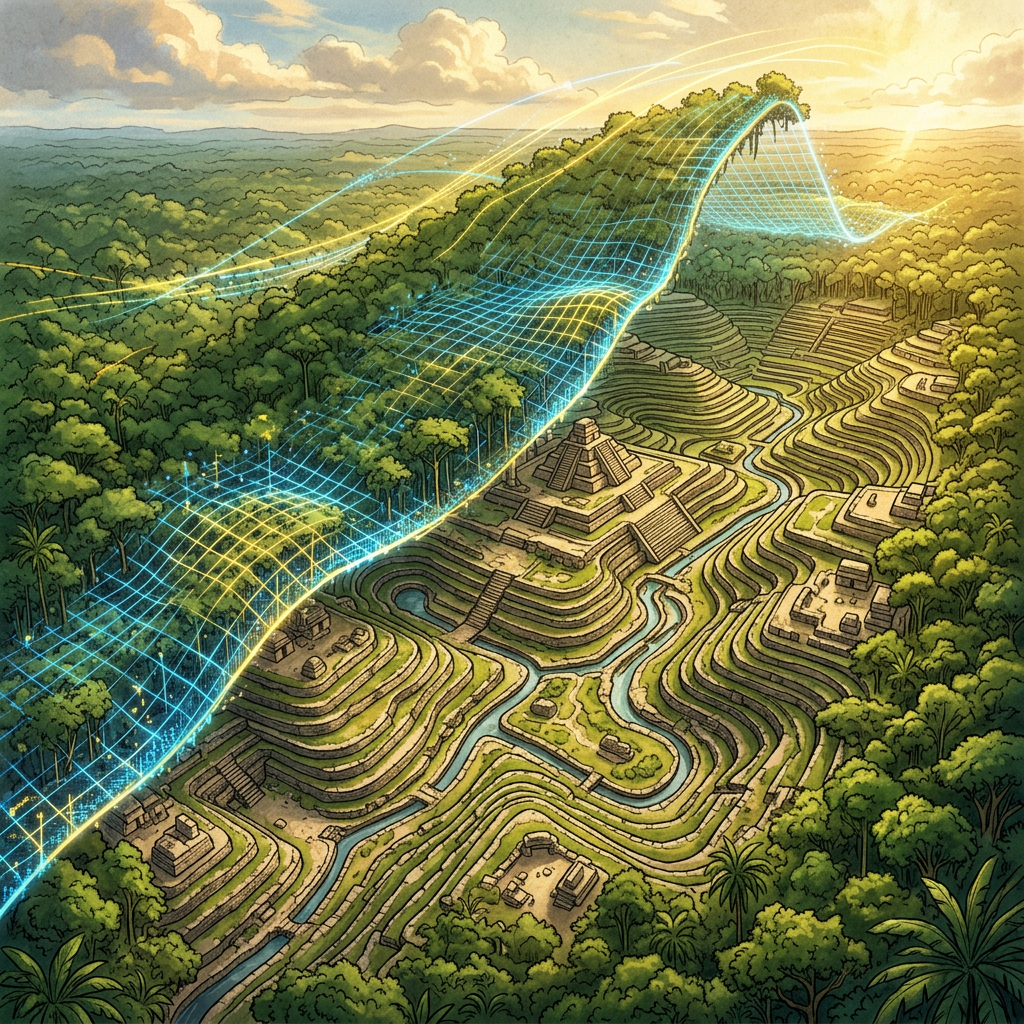
Archaeologists using high-density LiDAR (Light Detection and Ranging) in Mexico's Campeche region have announced the discovery of an unprecedented agricultural mega-complex. The survey revealed hundreds of limestone 'vertical hydroponic towers'—tiered stone structures designed to maximize crop yield in mountainous terrain using gravity-fed capillary irrigation. These structures, dating back to approximately 800 CE, suggest that the Maya civilization utilized far more advanced sustainable farming techniques than previously understood, allowing for massive population density in low-resource environments.
The LiDAR mapping also identified a 15-mile network of specialized stone-lined canals that interconnected the towers with a central urban hub. Lead researcher Dr. Elena Vance noted that this system likely supported a 'perpetual harvest' cycle, providing the city with year-round food security during the late Classic period's climatic shifts. Excavations around the base of the towers have already yielded carbonized remains of nutrient-dense root crops and maize, confirming the site's role as a primary caloric engine for the region.