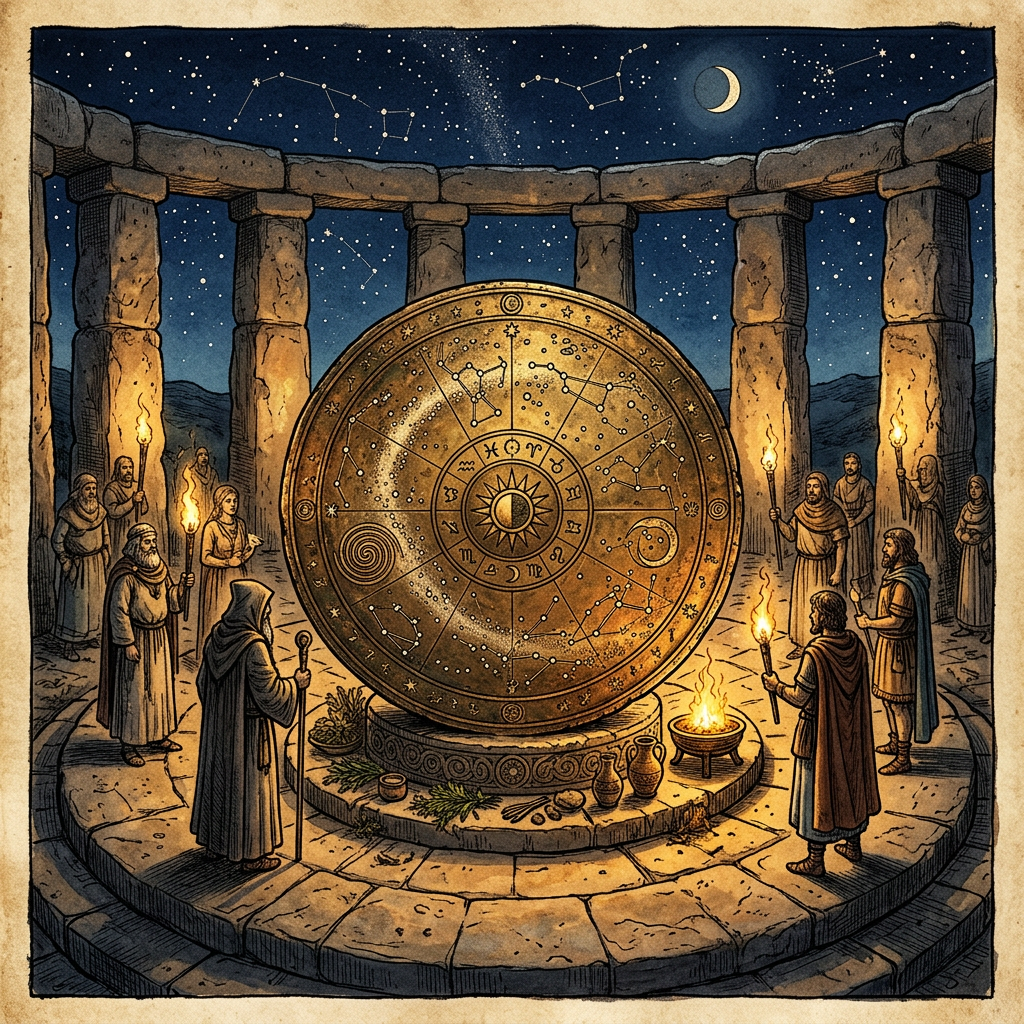
Archaeologists in China's Hubei Province have excavated a remarkable astronomical observatory dating to the Warring States period (c. 475–221 BCE). The site consists of a circular earthen platform surrounded by 28 stone pillars aligned with the 'Lunar Mansions' of traditional Chinese cosmology. At the center of the platform, the team discovered three polished bronze 'star-plates'—flat disks etched with the positions of the major constellations and used as reference tools for tracking planetary movement.
This discovery pushes back the timeline for the use of precision bronze astronomical instruments in China by several centuries. Dr. Chen Wei, lead researcher, noted that the observatory was likely part of a royal ritual complex intended to synchronize the state's calendar with celestial events. The precision of the pillar alignments suggests a mastery of trigonometry and stellar observation that was far ahead of its time, serving as a precursor to the famous imperial observatories of the Han and Tang dynasties.