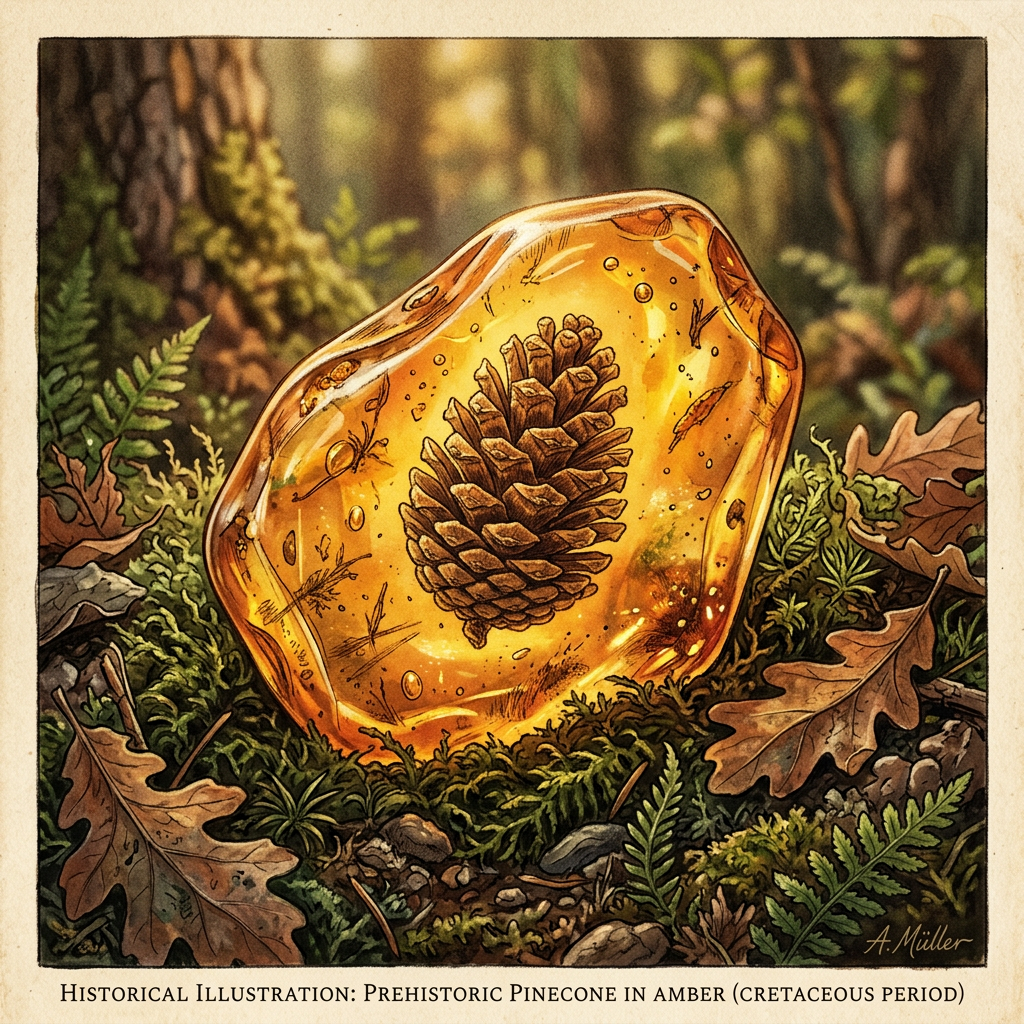
In the dense forests of the Curonian Spit, archaeologists have unearthed a cache of pinecones meticulously coated in liquid amber, dating back to approximately 1000 BCE. These rare finds were discovered arranged in a radial pattern around a central oak stump, suggesting a ritualistic feast or offering. The discovery points to the ancient Baltic 'Squirrel-Spirit' festival, a seasonal rite intended to honor the forest's foragers and mark the transition from winter storage to spring growth.
The amber coating served both a symbolic and preservative purpose, capturing the essence of the 'golden sun' within the seeds of the forest. Chemical analysis of the surrounding soil also identified traces of fermented hazelnut milk, further supporting the theory of a communal ritual meal. This finding offers a rare glimpse into the zoomorphic deities worshipped by Early Iron Age Baltic tribes before the consolidation of larger pantheons.