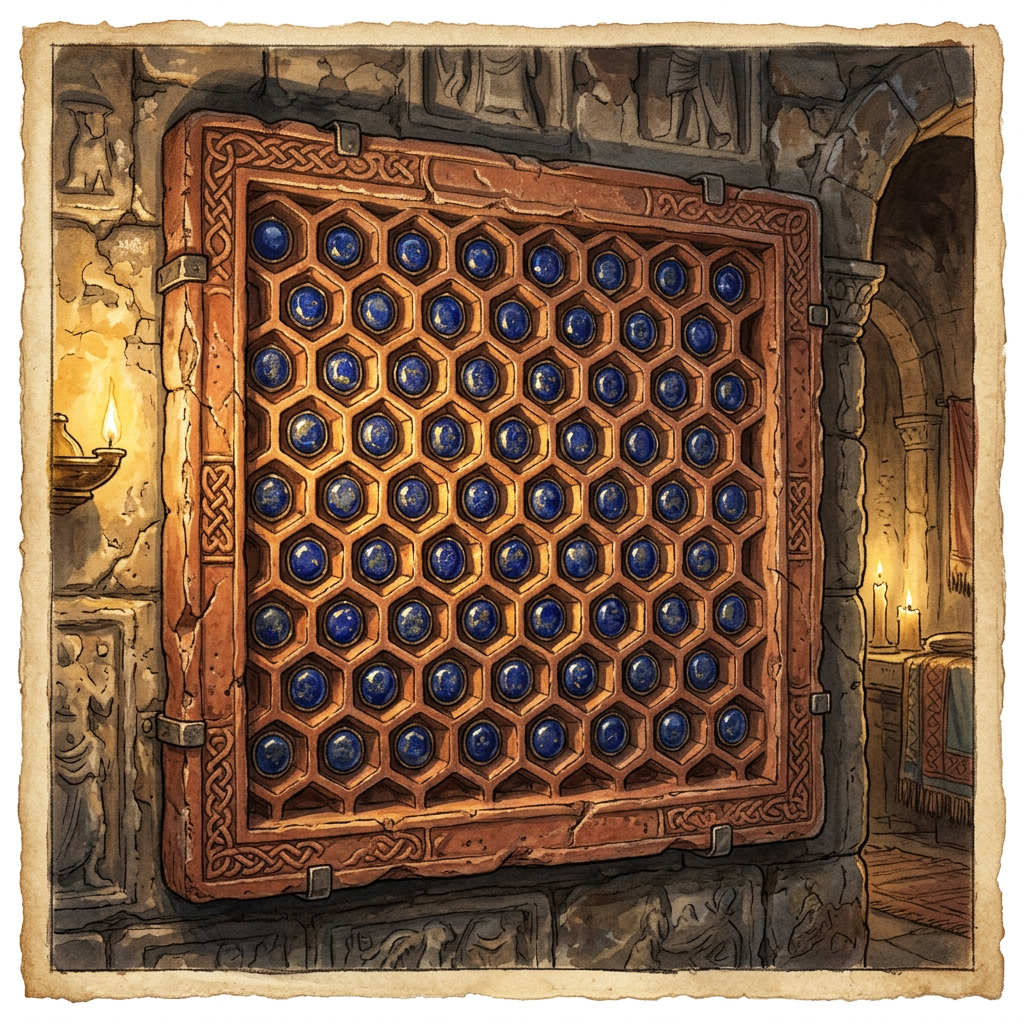
Archaeologists at the Minoan site of Malia have discovered a hidden chamber containing lapis-lazuli incrusted terracotta honeycombs. These unique artifacts were found paired with stylized bronze bee figurines and vessels containing remnants of rare, high-altitude thyme honey. The find provides the first direct evidence for a dedicated 'Festival of the Bee-King,' a ritual cycle that celebrated the hive as a model for the Minoan palatial social order.
The use of lapis lazuli—an expensive import from as far as modern-day Afghanistan—underscores the high status of the apiary rituals. Dr. Sophia Katsaros notes that the honeycombs were likely used as votive offerings to ensure the health of the swarms, which were vital for both food and the production of mead used in state banquets. This discovery adds a new dimension to our understanding of Minoan nature-worship and their advanced knowledge of entomology.