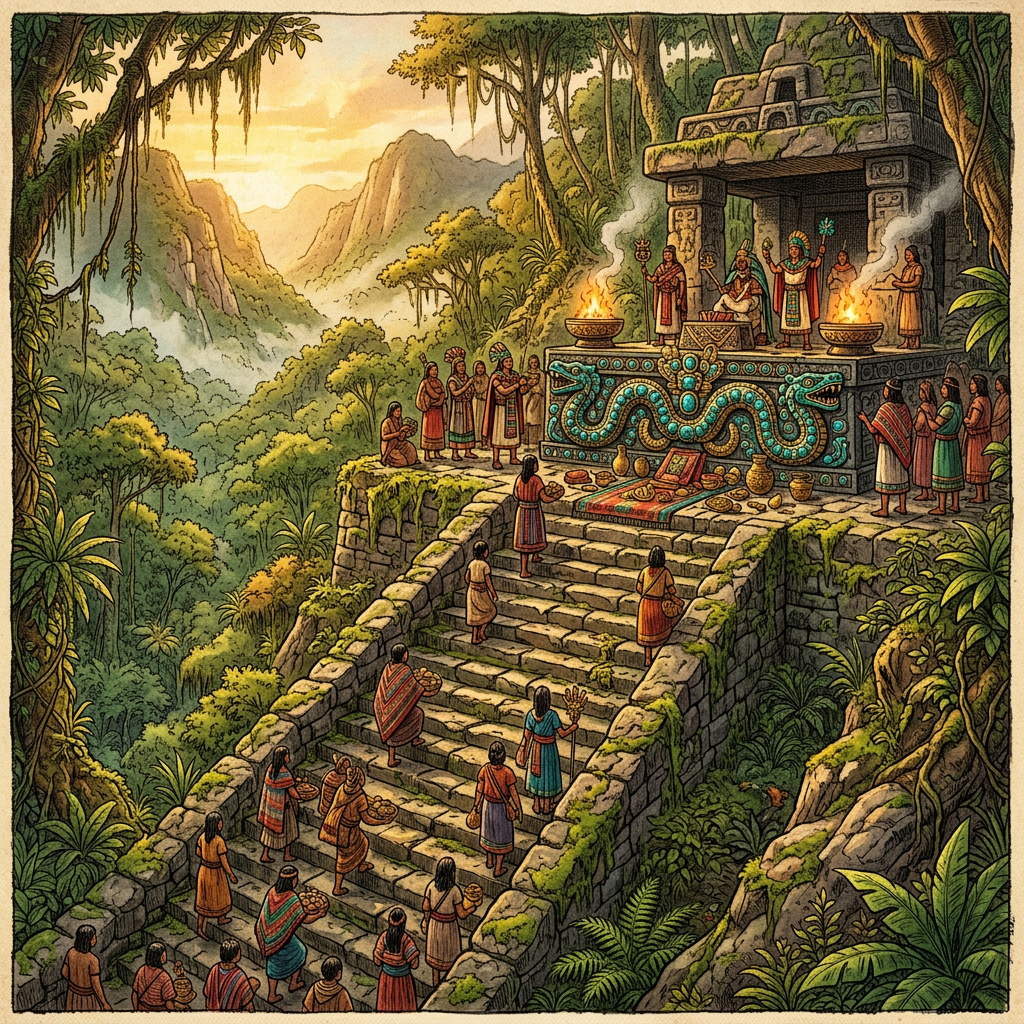
A team of international archaeologists has uncovered a massive ceremonial complex in Peru's Zaña Valley, dating back to the late Formative Period. The site, dubbed the Temple of the Great Serpent, features a sunken circular plaza and a central staircase flanked by ten-foot-tall feline and serpentine monoliths. The most striking find is a series of stone lintels encrusted with high-quality turquoise and spondylus shell inlays.
The temple's orientation suggests it was used for water-fertility rituals, with channels designed to direct rainwater through carved stone mouths. Researchers state that the polychrome murals found in the inner chambers depict a transition between the Cupisnique and Chavín cultures. This discovery confirms the site as a major pilgrimage center that predates many of the better-known Andean civilizations.