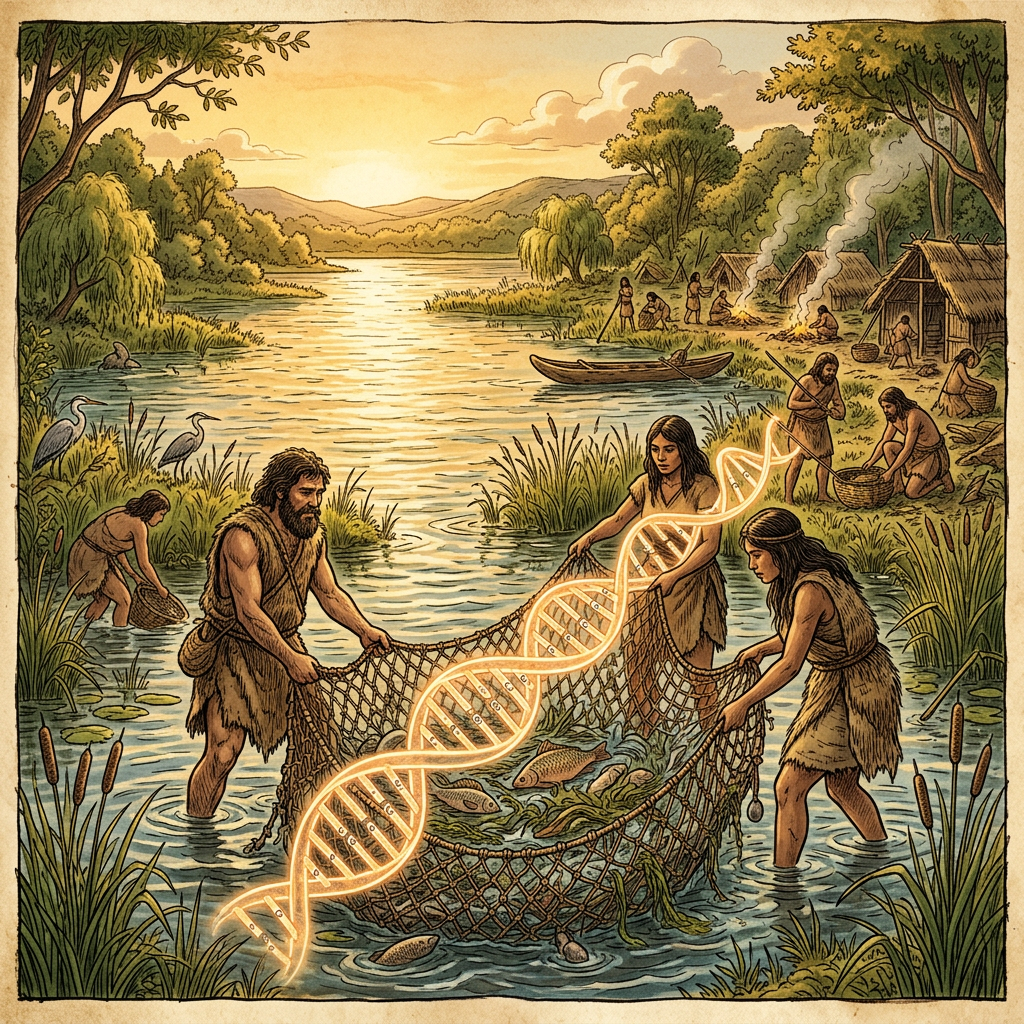
A breakthrough genomic study published in Nature Research on April 13, 2026, has identified a previously unknown ghost lineage of modern humans from remains found near Lake Victoria. The analysis of 13,000-year-old dental fragments reveals a distinct population of aquatic foragers who possessed specific genetic markers for enhanced oxygen transport in high-humidity, low-elevation environments. These hemoglobin-variant adaptations suggest a long-term isolation from both West African and Nilotic populations during the Late Pleistocene.
The research, led by an international consortium of paleogenomicists, utilized single-cell DNA sequencing to bypass significant microbial contamination. The findings indicate that these foragers maintained a specialized diet primarily composed of endemic lake fish and mollusks, which influenced genetic selection for metabolic pathways distinct from contemporary inland hunter-gatherers. This discovery rewrites the early Holocene migration maps of East Africa, suggesting a more complex mosaic of human settlement around the Great Lakes than previously understood.