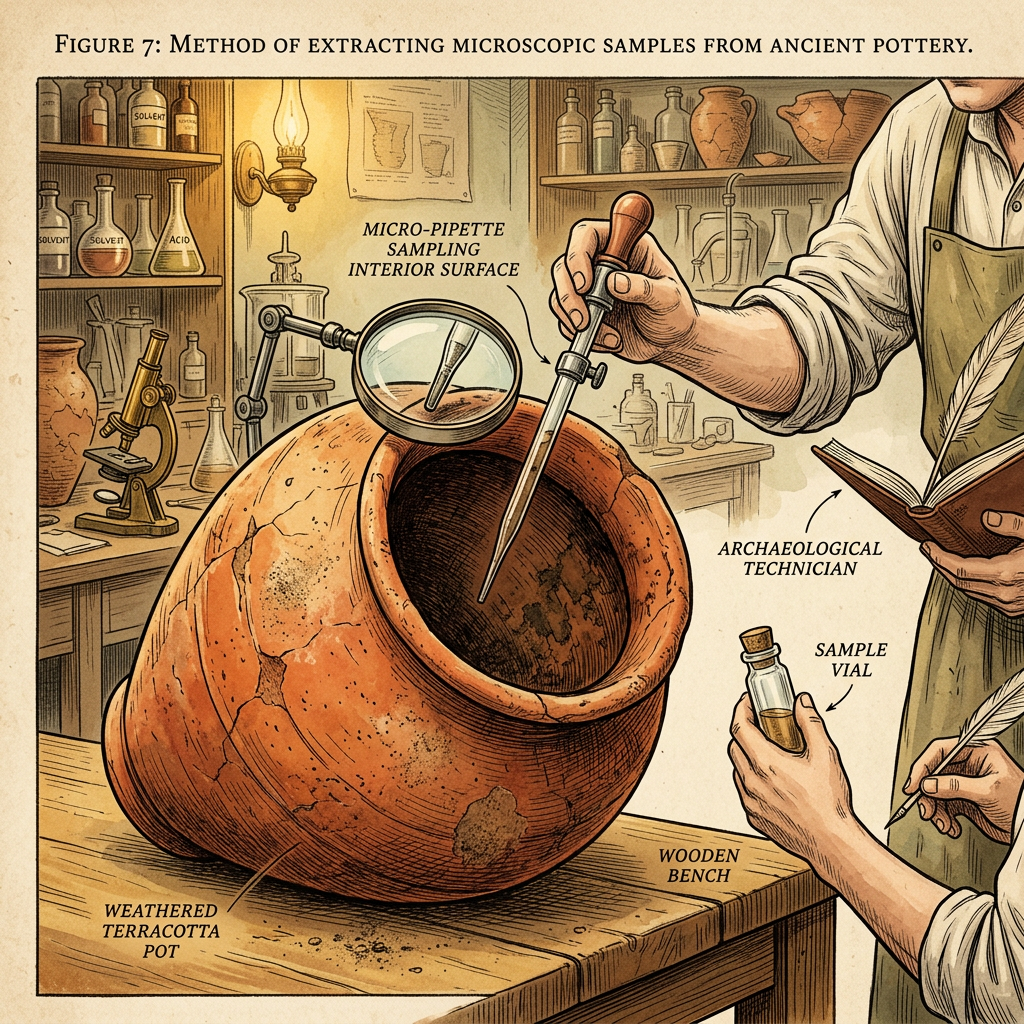
Archaeologists at IIT Kanpur have published a groundbreaking proteomic analysis in The Journal of Bioarchaeology on April 03, 2026, regarding the contents of Ochre-Coloured Pottery (OCP) found in the Yamuna Basin. The study identified protein residues of Apis dorsata honey along with trace elements of wild ginger and turmeric. The specific peptide markers suggest that the vessels were used for the long-term fermentation of medicinal mead, providing the earliest evidence of standardized pharmaceutical production in late-second millennium BCE India.
This discovery contradicts the long-held view that OCP cultures were primarily nomadic pastoralists. The presence of sophisticated bio-preservation techniques indicates a sedentary society with a specialized knowledge of antiseptic fermentation. The researchers noted that the chemical ratios found in the residues align precisely with Ayurvedic recipes for wound-healing tonics described in later classical texts, suggesting a deep-rooted continuity in Indian medicinal science.