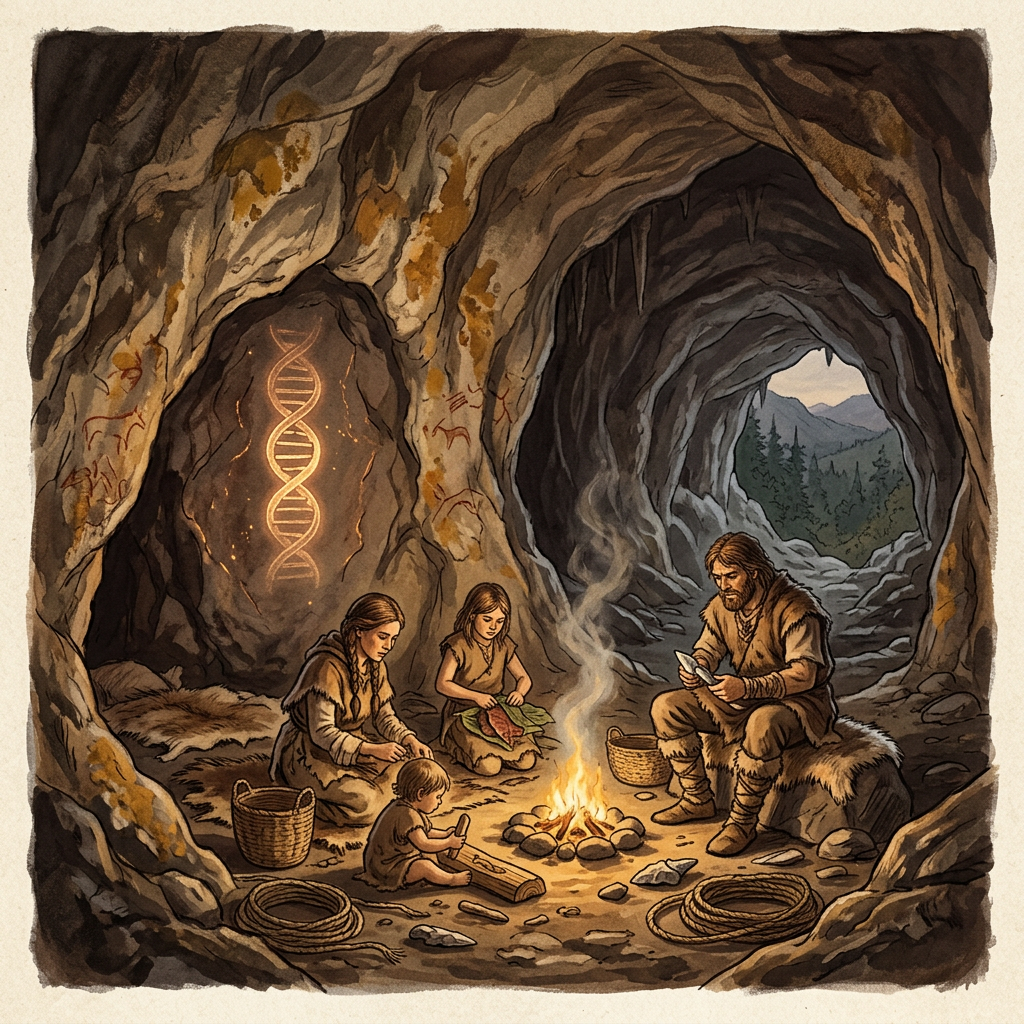
A large-scale genomic study published in Science Advances on April 01, 2026, has analyzed the remains of a Late Pleistocene hunter-gatherer from the Drakensberg Mountains of South Africa. The research identifies a unique cluster of genes associated with enhanced respiratory immunity and resilience to cave-dwelling pathogens. This genetic signature represents the earliest known human adaptation to specialized high-altitude subterranean environments, predating similar adaptations in the Andes or Himalayas by thousands of years.
The study, led by the University of the Witwatersrand, used ancient DNA extracted from a petrous bone to reconstruct the individual's metabolic profile. The findings reveal that this 'montane lineage' had evolved specialized lung-tissue repair mechanisms, likely as a response to the high particulate matter and fungal spores found in deep cave shelters during the last glacial maximum. This genomic insight provides a window into how early human populations biologically specialized to thrive in extreme environmental niches.