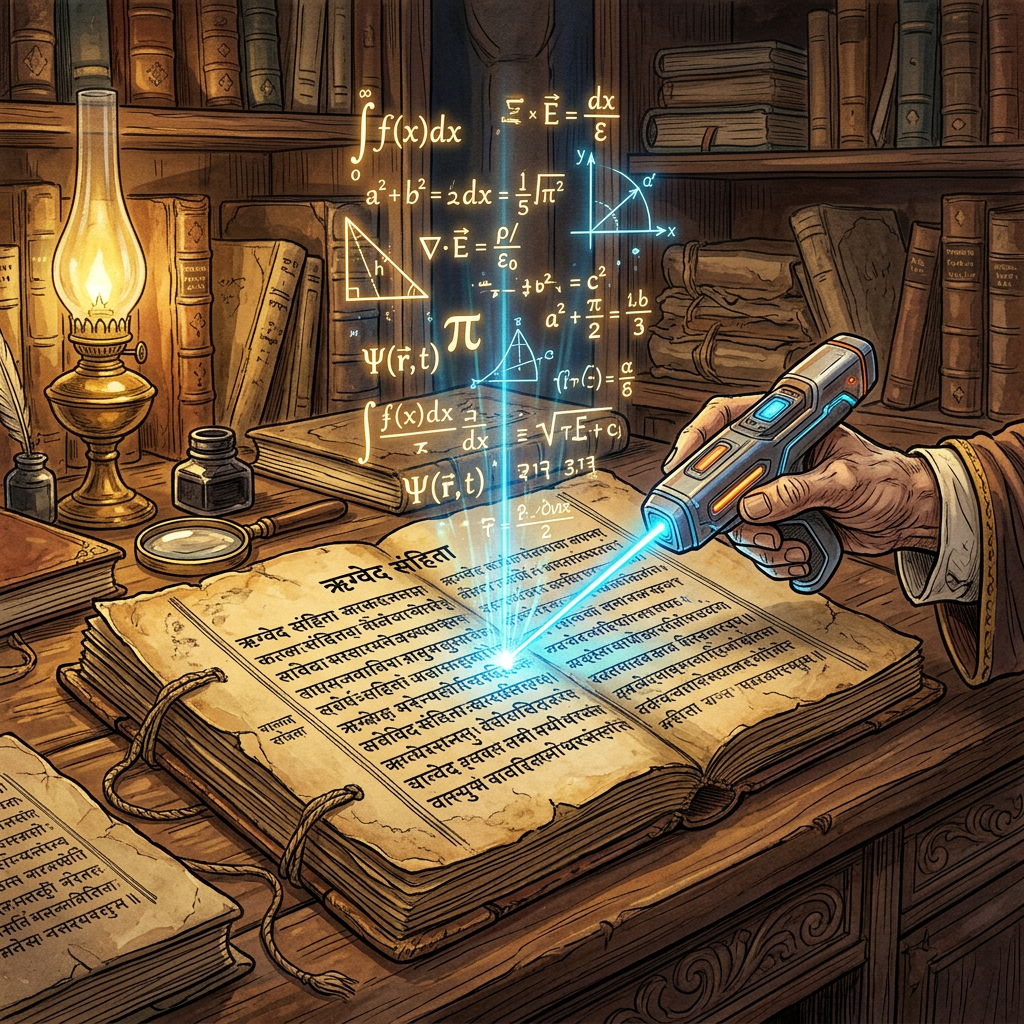
Researchers at the Indian Institute of Science have completed a computational analysis of 11th-century Gola-Dipika manuscripts, uncovering advanced algorithms used to model non-linear solar parallax. The study suggests that medieval Sanskrit astronomers utilized iterative numerical methods that predated similar developments in European mathematics by several centuries, achieving remarkable precision in predicting solar positions.
This breakthrough was made possible through AI-driven manuscript processing, which helped reconstruct missing fragments of the text. The findings highlight a sophisticated understanding of spherical geometry and its application to atmospheric optics, emphasizing the rigorous scientific tradition of the Kerala school of mathematics and its predecessors.