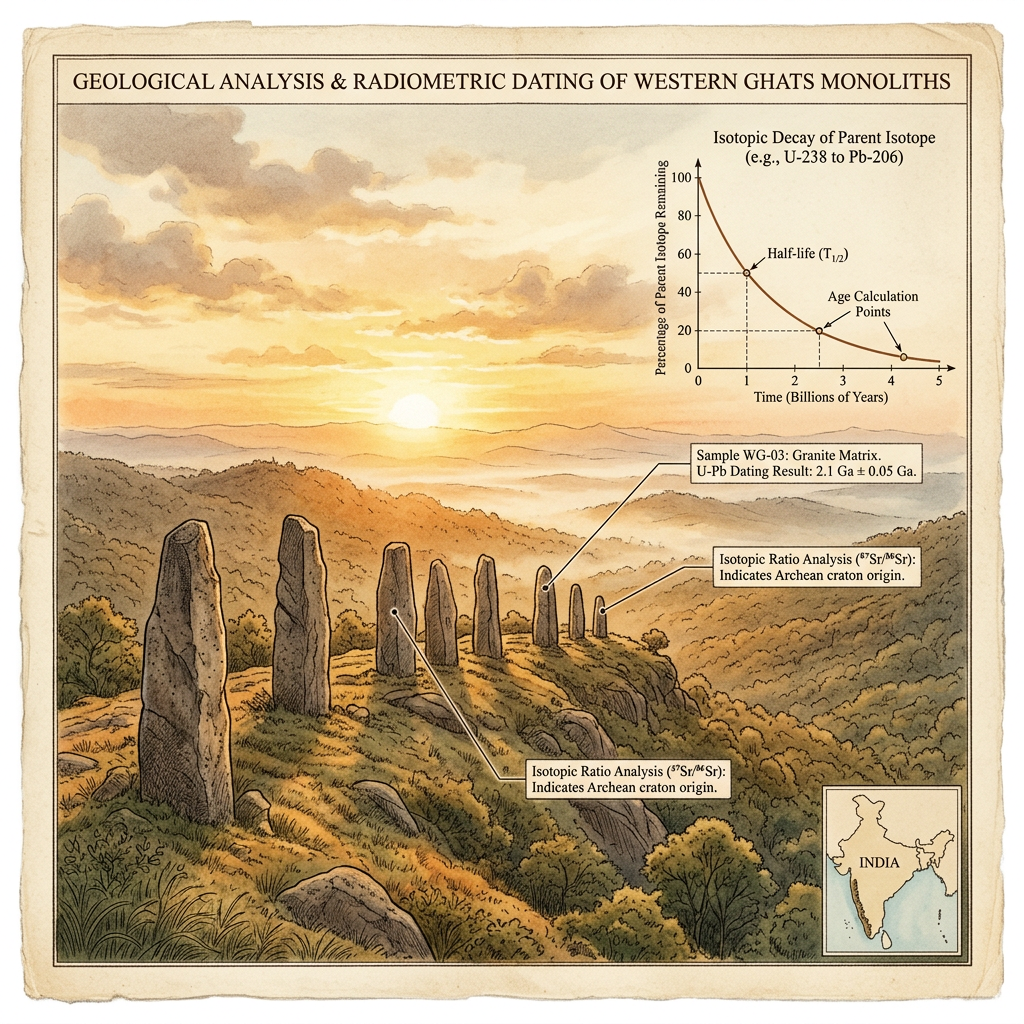
A new study in the Journal of Archaeological Science introduces a revolutionary 'Helium-3/Neon-21' cosmogenic dating methodology. This technique has been applied to Neolithic 'Menhir' complexes in the Western Ghats, refining their construction date to precisely 3400 BCE. The dual-isotope approach significantly reduces the margin of error inherent in traditional surface exposure dating, allowing researchers to synchronize archaeological phases with regional paleoclimate data.
The application of this technique in India provides a new chronological anchor for the Southern Neolithic. By measuring the accumulation of cosmogenic nuclides in granite monoliths, scientists can now distinguish between different stages of megalithic construction with sub-decadal precision, offering a clearer view of early settled life in the peninsula.