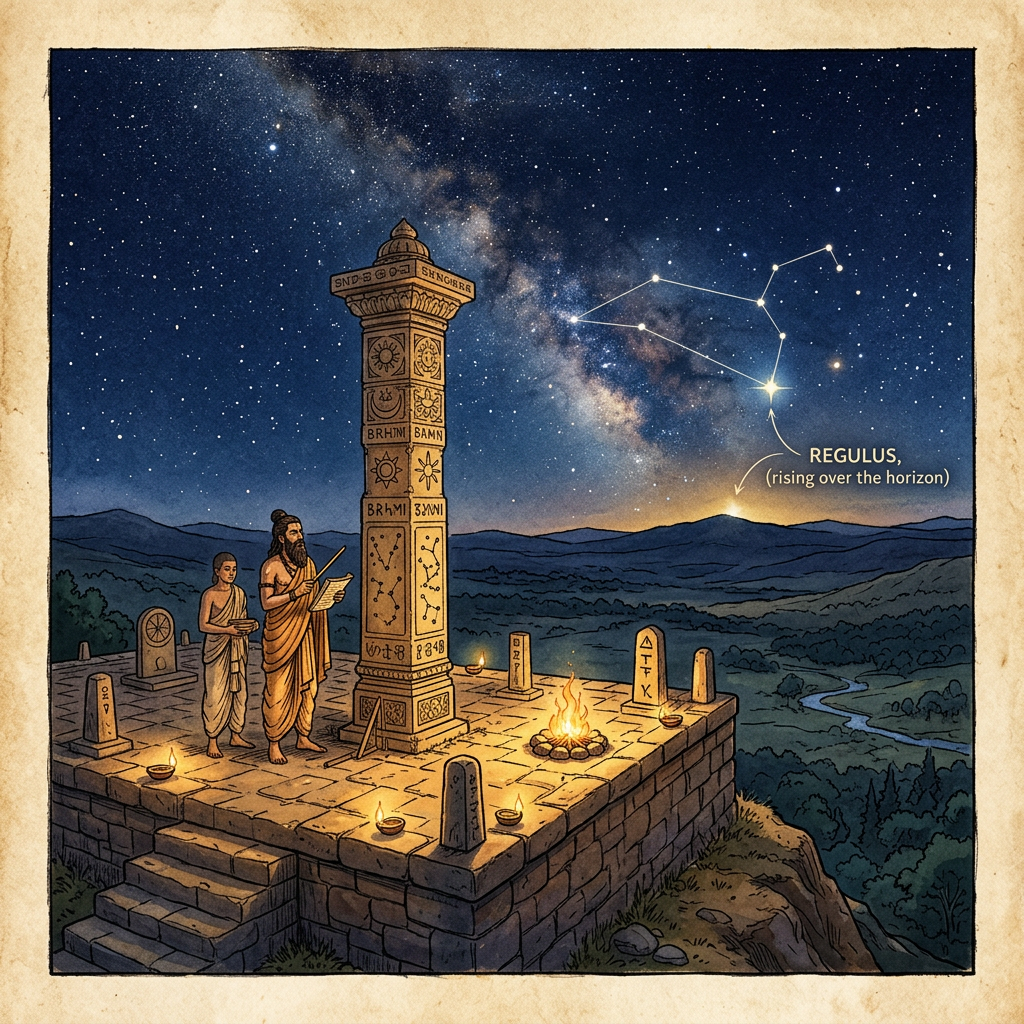
New research published in the Journal of Indian Philosophy correlates 1st millennium BCE Jyotisha tables with the precise observation of the heliacal rising of the star Regulus (Magha) in 950 BCE. By applying modern astronomical retro-simulations, scholars have validated the observational accuracy of these early Vedic texts, which were used to synchronize ritual calendars with the solar year.
The study demonstrates that ancient observers utilized high-precision horizon tracking to record the drift of fixed stars due to precessional shifts. This level of accuracy suggests the existence of standardized observational instruments and a long-term data-keeping tradition that spanned several centuries across the Indo-Gangetic plain.