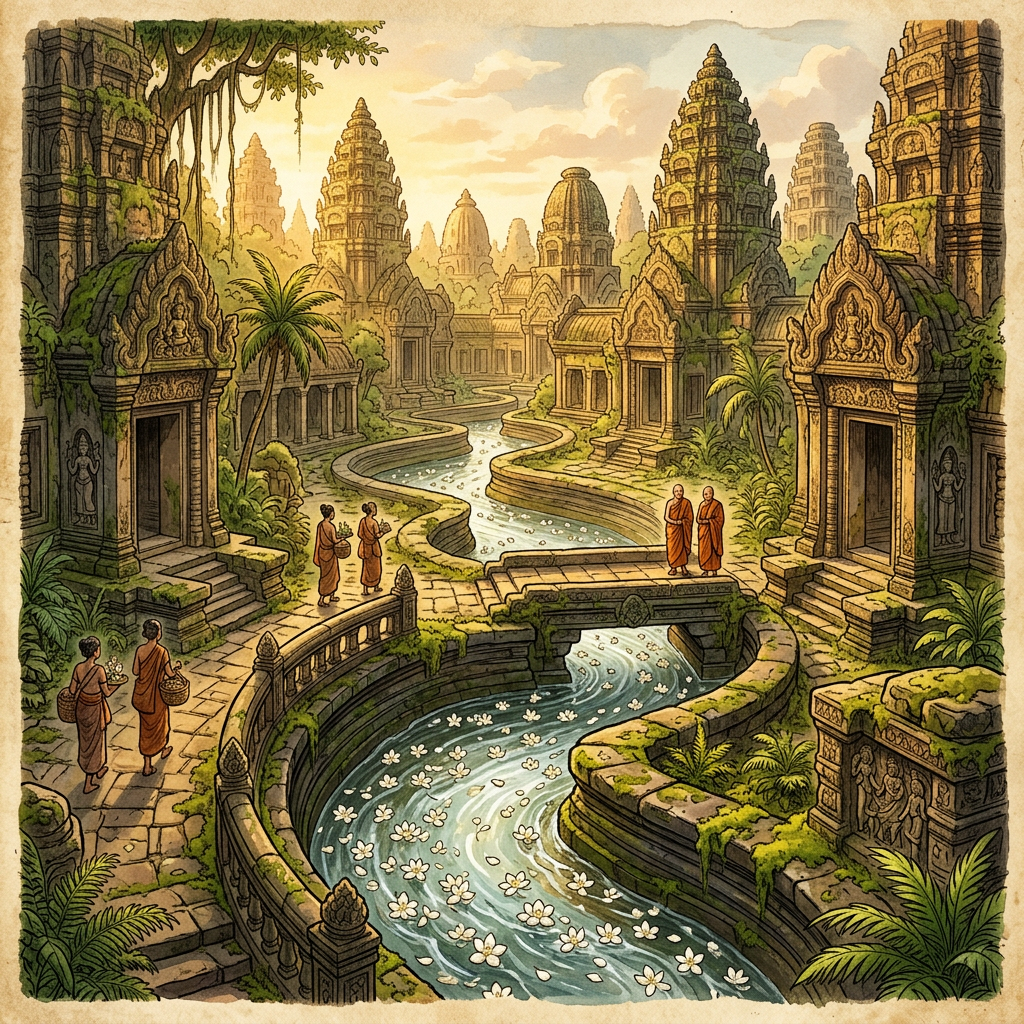
A joint Cambodian-French mission at the UNESCO World Heritage site of Sambor Prei Kuk has discovered a complex of 'sandstone-lined' ritual water channels leading into a central ceremonial pool. Dating to the 7th-century Chenla Period, these structures appear to have been the site of large-scale water-cleansing ceremonies that are the precursors to the modern Songkran (Khmer New Year) festivities.
Analysis of the sediment at the bottom of the channels revealed traces of aromatic oils and jasmine pollen, indicating that the water was ritually perfumed before being poured over statues and participants. This discovery provides the oldest archaeological link to the water-blessing traditions that remain a cornerstone of cultural heritage across Southeast Asia.