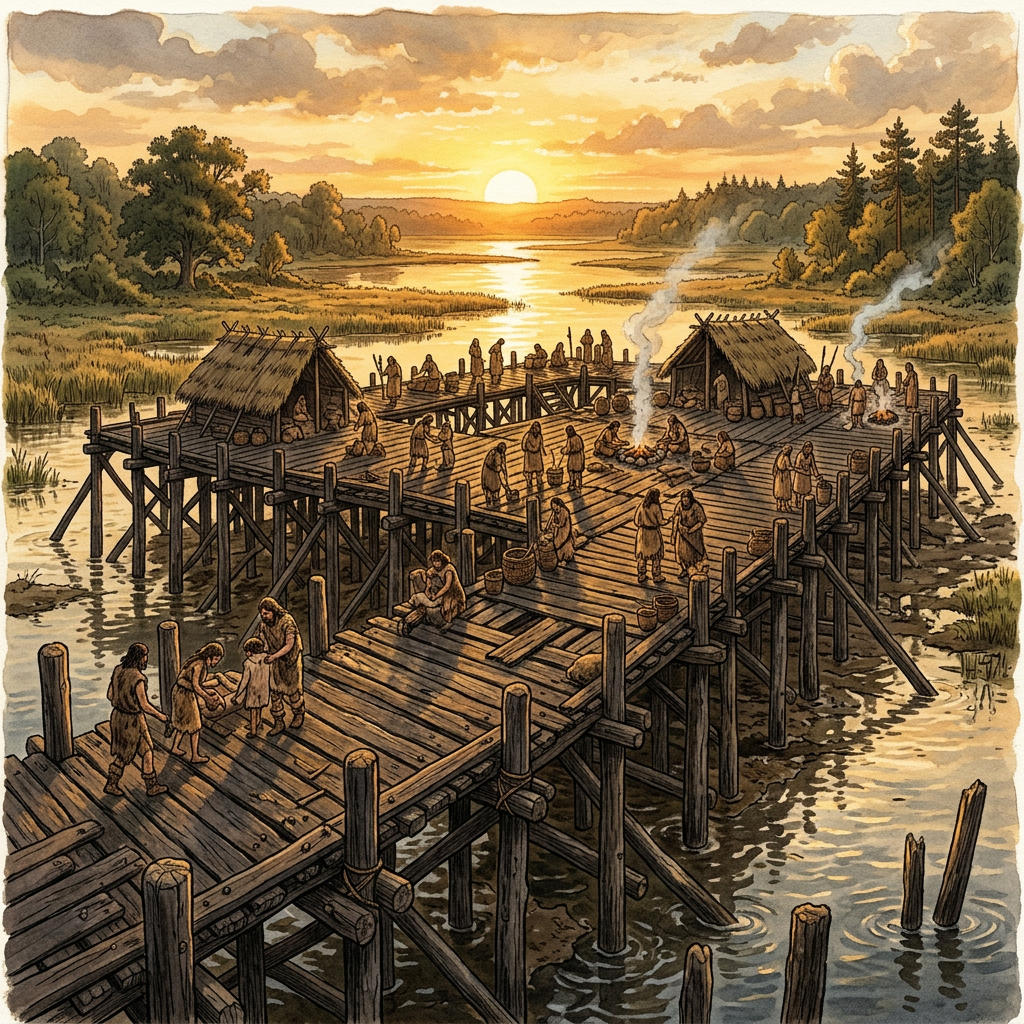
Archaeologists at the Brú na Bóinne complex in Ireland have identified a series of previously unknown 'oak-carved' solar pavements dating back to the late Neolithic period. These timber-lined platforms were specifically oriented to track the setting sun during the Summer Solstice, providing a physical venue for prehistoric gatherings that likely involved dance and astronomical observation.
The preservation of the oak planks in the waterlogged soil has allowed for dendrochronological dating, placing the construction of these festival platforms roughly around 2200 BC. The discovery suggests that while the great stone passage tombs were for the ancestors, these wooden plazas served the living, hosting large-scale seasonal celebrations that defined the ritual year for the farming communities of the Boyne Valley.