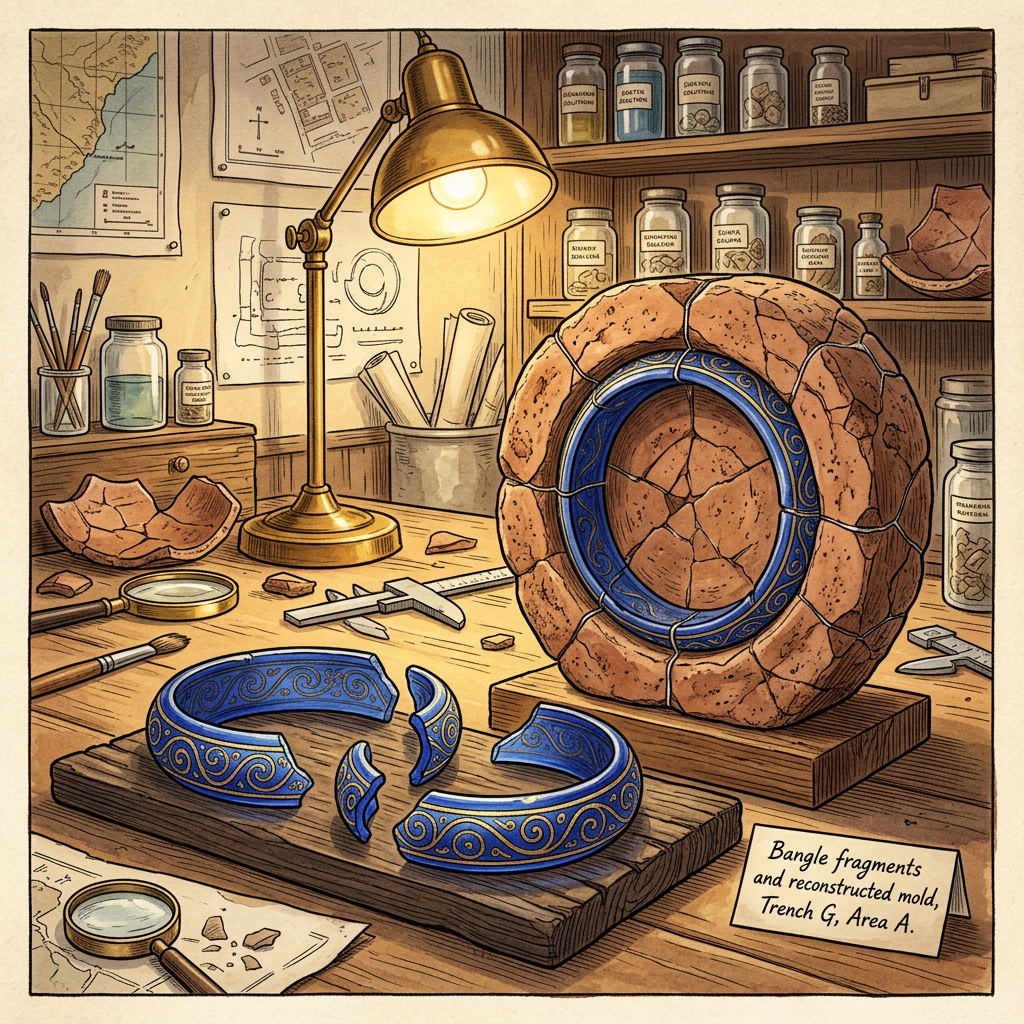
Excavations at an Iron Age oppidum in Bavaria have brought to light a significant Celtic industrial wing dedicated to the production of high-status glass jewelry. The site, dating to the 2nd century BCE, yielded several intact clay molds for the iconic blue-and-gold glass bangles that were highly prized across ancient Europe.
The find is unique because it includes a specialized annealing oven designed specifically for multi-colored glass fusion, a technique previously thought to be less common in the region. Archaeologists also recovered traces of cobalt and antimony, indicating that Celtic craftsmen had developed a complex supply chain for rare mineral stabilizers to achieve deep, vibrant hues.