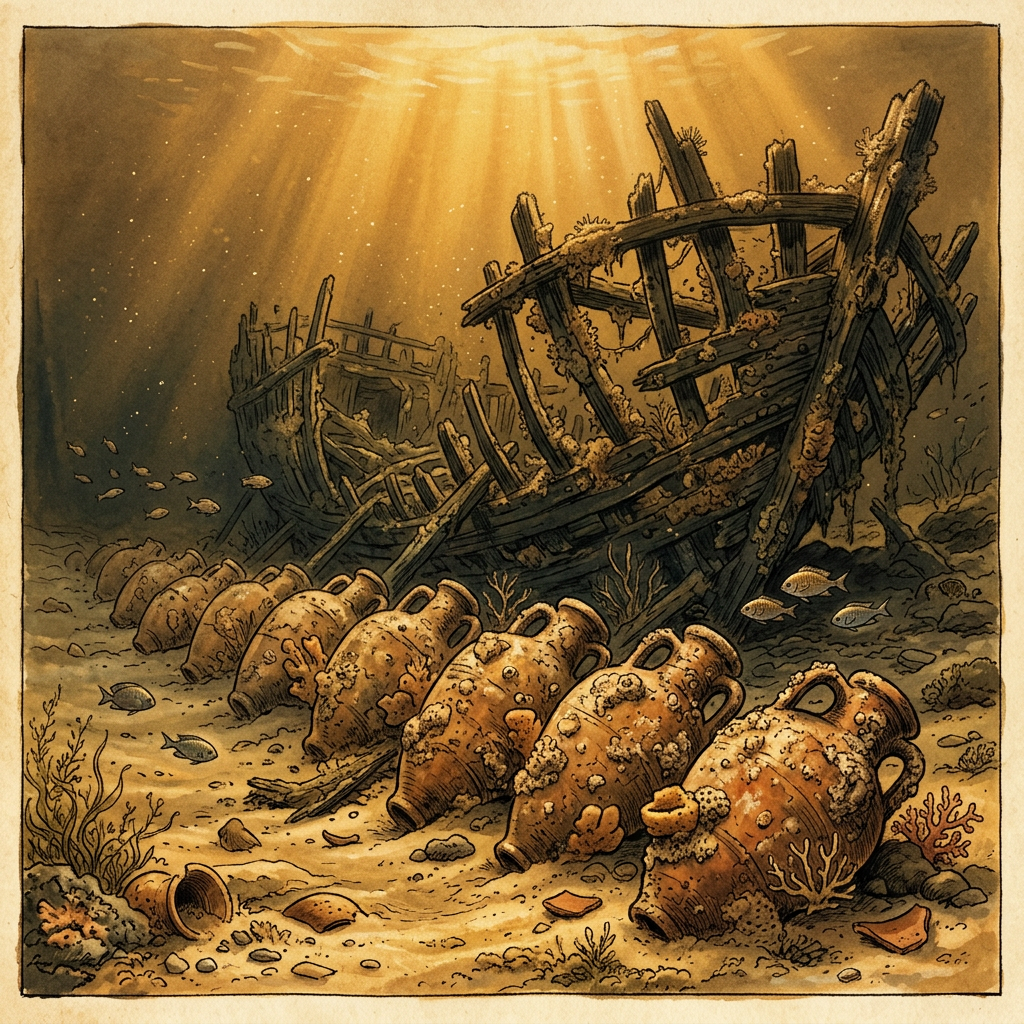
Marine archaeologists have located a pristine Punic-era shipwreck off the western coast of Sicily, providing a rare glimpse into the maritime economy of Carthage. The vessel, which sank in the late 4th century BCE, carried a unique cargo of terracotta jars filled with carbonized remains of North African spices, including silphium and cumin, as well as large blocks of raw aromatic resin.
The shipwreck's hull is exceptionally well-preserved due to the surrounding seafloor sediments, revealing advanced Carthaginian shipbuilding techniques such as the use of pre-cut, numbered timbers for rapid assembly. This discovery underscores the importance of the spice trade in the Punic world and highlights the role of Sicily as a strategic hub for Carthaginian commercial interests in the Mediterranean.