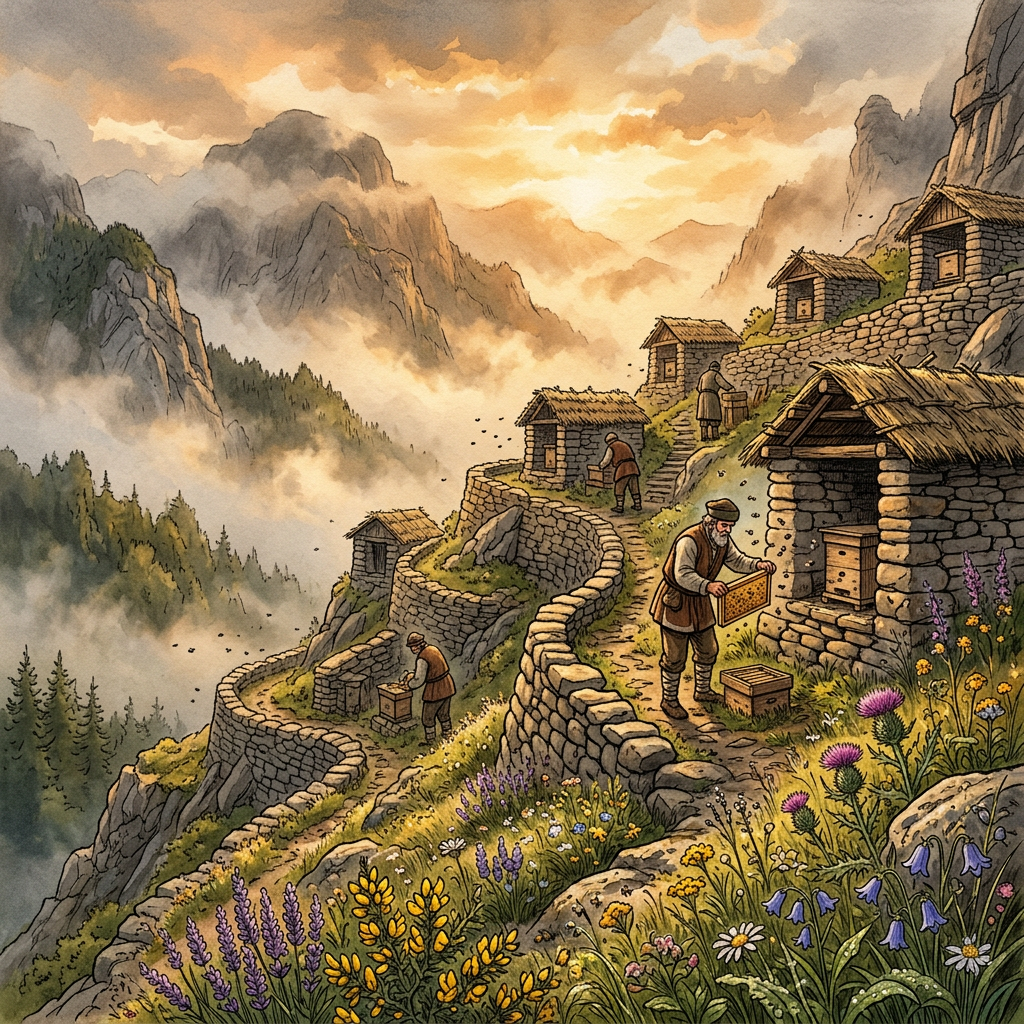
UNESCO officially inscribed the traditional bee-culture landscapes of the Rhodope Mountains, spanning the border of Bulgaria and Greece, onto the World Heritage List on April 3, 2026. This unique site recognizes a 2,000-year-old tradition of apiculture where honeybees are kept in stone-walled enclosures built into the mountain slopes. These structures, known locally as trushni, represent a rare surviving example of prehistoric agricultural engineering dedicated to the management of pollinators.
The designation highlights the complex ecological knowledge of the mountain communities, who used specific geological formations to create micro-climates that protected hives from harsh winters. The stone walls also served as defensive structures against bears and other predators. UNESCO noted that this 'living cultural landscape' is essential for maintaining the biodiversity of the region, as the traditional methods have preserved ancient strains of the Bulgarian honeybee that are resistant to many modern diseases.
The inscription comes with an emergency grant to help local practitioners repair crumbling stone walls and to encourage younger generations to continue the practice. As climate change shifts flowering seasons, these ancient apiaries are being studied by modern scientists for their thermal efficiency. The Rhodope bee-culture is now recognized as a vital piece of human history, demonstrating how ancient societies co-evolved with the natural world through ingenious structural design.