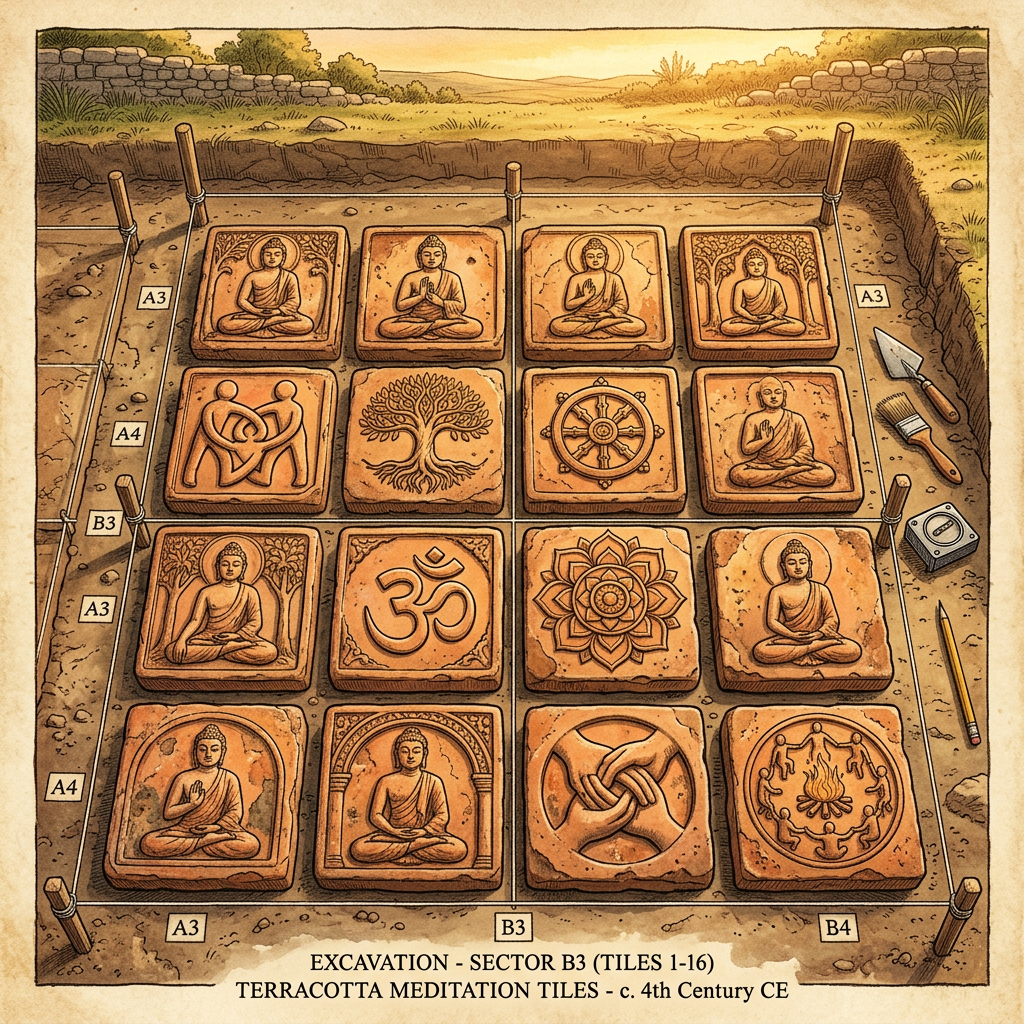
A team of archaeologists in Haryana has unearthed a set of terracotta tablets from the 5th century BCE that contain fragments of the 'Samatva-Bhashya'. This early commentary focuses on the philosophy of Samatva (Equanimity), but with a unique focus on social inclusion. It argues that the realization of the universal self (Atman) necessitates the rejection of hierarchy and the cultivation of radical empathy toward all sentient beings.
Dr. Ananya Sharma of the National Museum of India states that this text is one of the earliest known records of a systematic philosophical argument for social equality within the Vedic tradition. The 'Samatva-Bhashya' frames the attainment of wisdom as being inextricably linked to the practitioner's ability to see themselves in others, regardless of their social standing. The discovery provides crucial evidence for the existence of powerful reformist movements within ancient Indian philosophy long before the modern era.