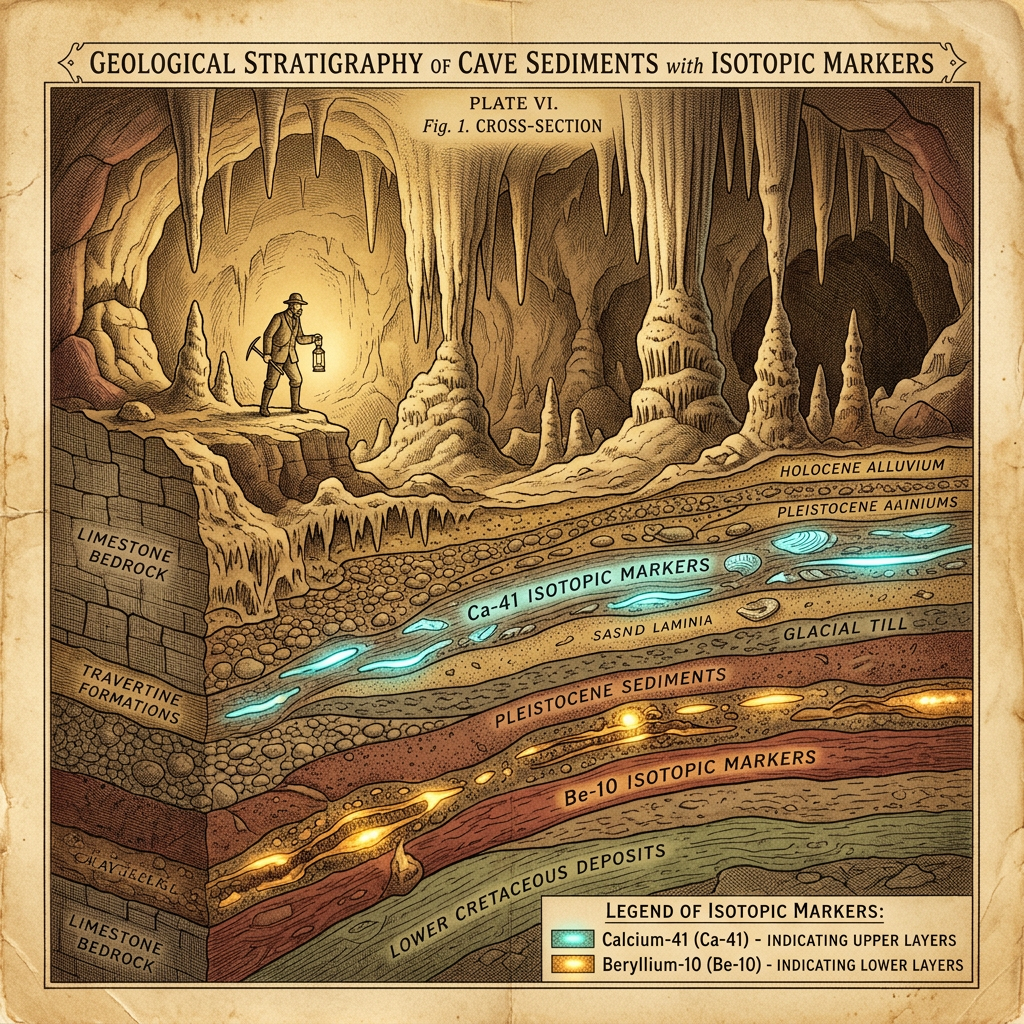
A breakthrough research paper published in Nature Communications has introduced a novel dual-isotope dating methodology that combines Calcium-41 and Beryllium-10 to provide unprecedented chronological resolution for arid-land archaeology. By applying this technique to calcified sediments in the Nullarbor Plain, researchers have successfully dated human occupation layers to a precise window of 55,000 years ago, significantly refining the timeline of the initial peopling of the Australian interior.
The study highlights how this new cross-calibration overcomes the limitations of traditional radiocarbon dating in environments where organic preservation is poor. The findings suggest that early Sahulian populations possessed sophisticated adaptive strategies for hyper-arid environments much earlier than previously modeled, utilizing seasonal limestone caves as permanent migratory hubs.