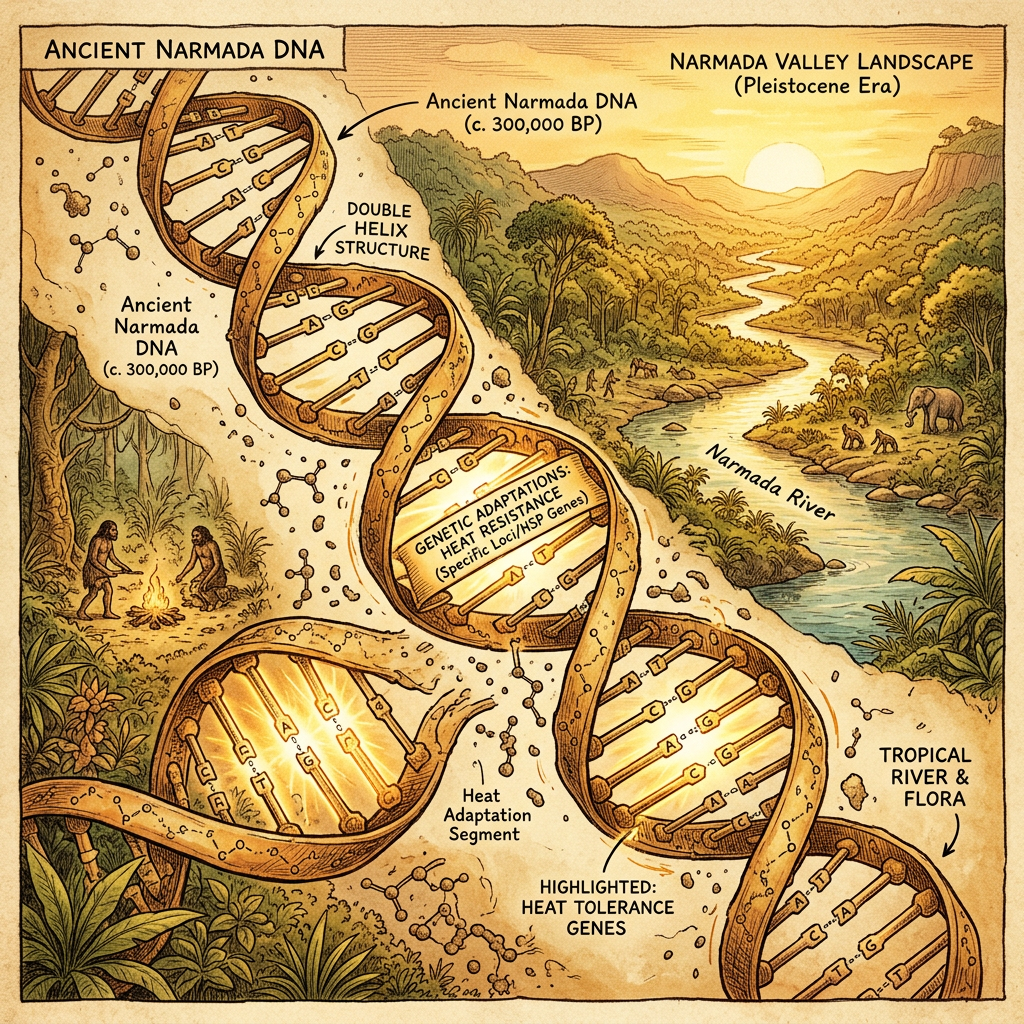
A team of paleogenomicists has published a landmark study in Science Advances regarding the genomic history of the Narmada-Tapti interfluve. By sequencing the DNA of 12,000-year-old remains, the research identifies the earliest known genetic markers for resilience to heat-induced oxidative stress. This adaptation, found in a previously uncharacterized Pleistocene lineage of Central India, provided a critical survival advantage during the rapid warming of the early Holocene.
The study also reveals that this population maintained significant genetic isolation for over five millennia, suggesting that the diverse micro-climates of the Central Indian highlands acted as long-term refugia. These findings offer new insights into how ancient South Asian populations genetically pivoted to thrive in the subcontinent’s extreme thermal environments.