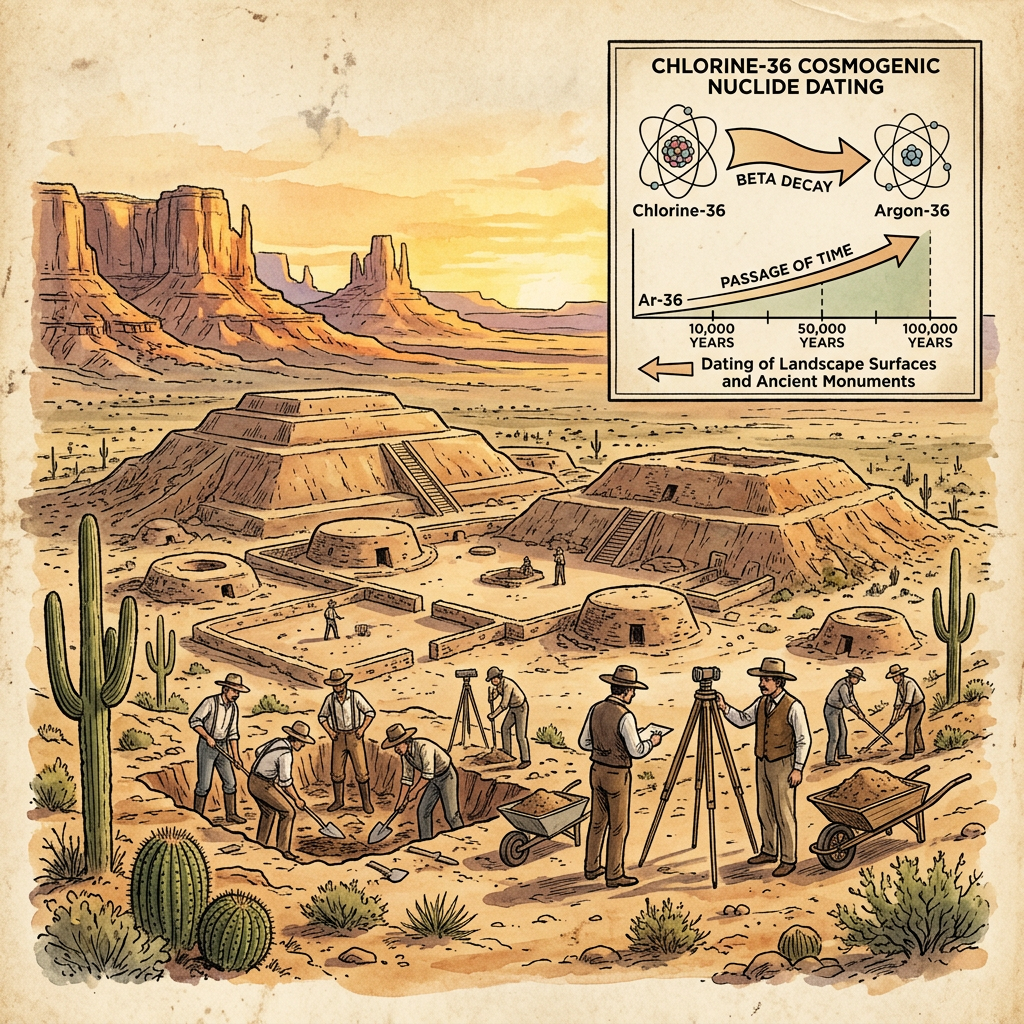
A scholarly breakthrough in Archaeological Science has applied Chlorine-36 surface exposure dating to the basalt foundations of the Pueblo Grande platform mounds in Phoenix, Arizona. This new methodology has achieved a refined chronology, placing the primary construction phase exactly in 1250 CE, a period of significant social reorganization in the American Southwest.
By measuring the accumulation of cosmogenic isotopes in the stones since they were first quarried, the research provides a definitive timeline that correlates the expansion of the mounds with a major shift in hydrological management. This study offers a new standard for dating lithic structures in arid environments where organic material for radiocarbon dating is often contaminated or absent.