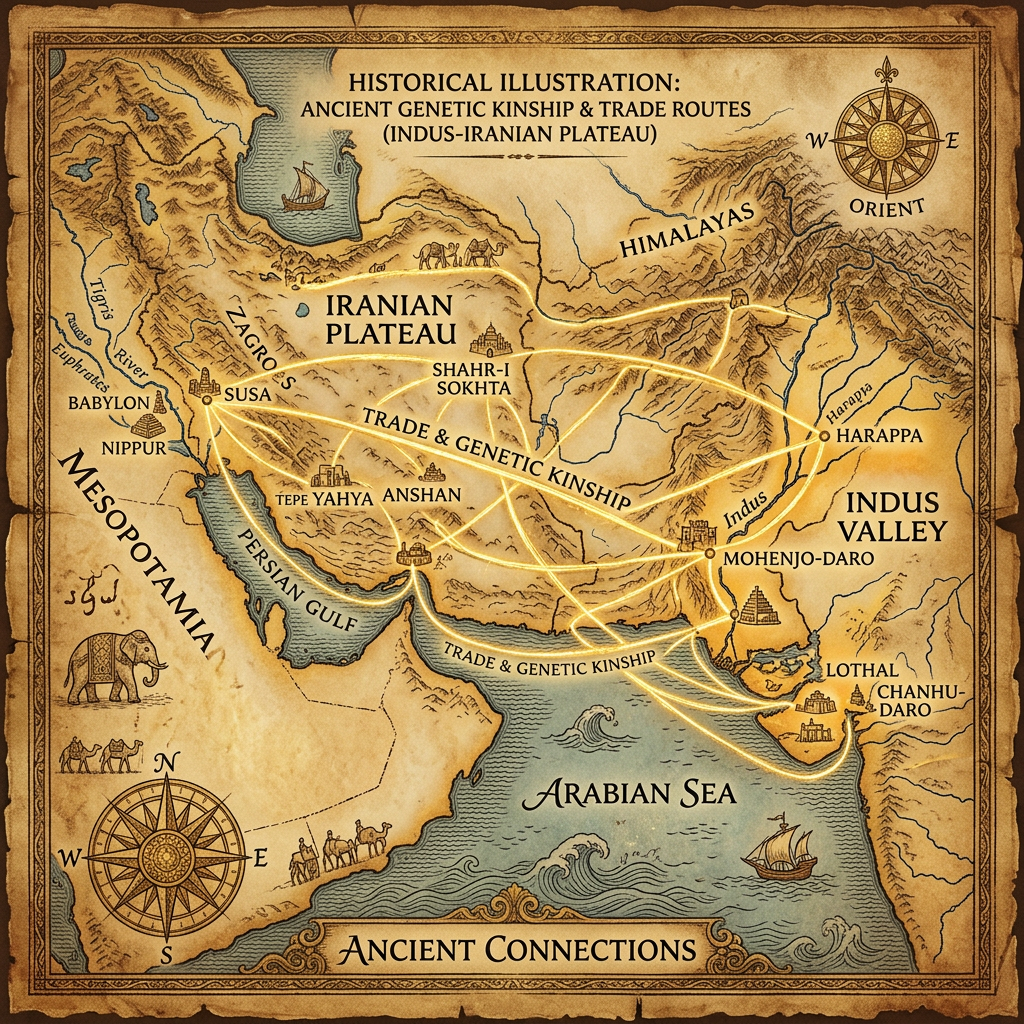
A massive genomic study published in Cell Reports has successfully sequenced 4,500-year-old DNA from the Harappan site of Farmana in Haryana. The analysis identifies a distinctive genetic signature that acts as an 'ancestral bridge' between the core Indus Valley populations and the contemporaneous inhabitants of the Iranian Plateau, suggesting a high degree of female-mediated mobility and kinship networks across the Bronze Age landscape.
The research refutes models of mass migration, instead supporting a framework of long-term, stable gene flow between these two major civilizations. This genetic continuity suggests that the 'Harappan' identity was as much a product of extensive inter-regional marriage alliances as it was of local cultural evolution.