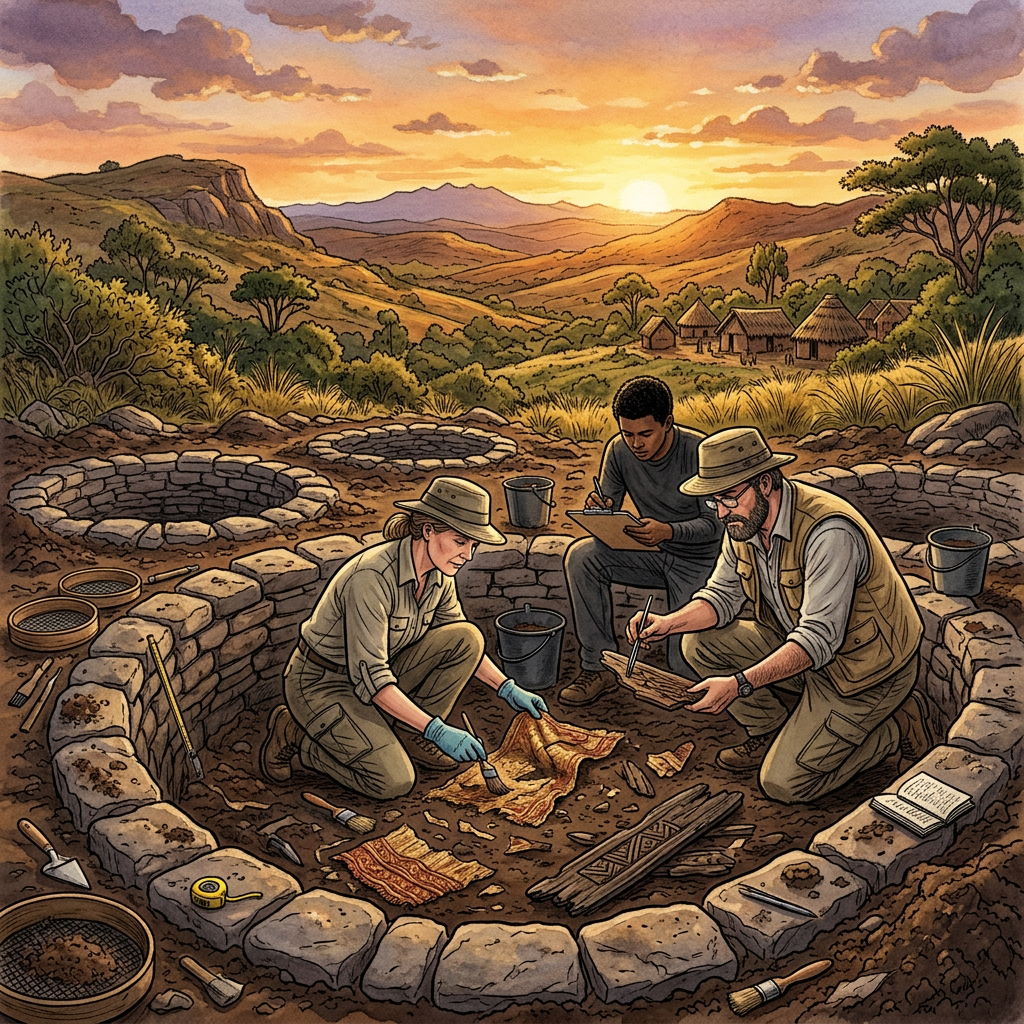
Archaeologists working in the central highlands of Madagascar have unearthed a series of monumental ritual pits dating back to the 8th century. These pits contain evidence of secondary burial practices, including meticulously arranged fragments of silk and wood, which researchers believe represent the earliest known precursors to the Famadihana, or the 'turning of the bones' festival. This discovery suggests that the practice of ancestor veneration through the periodic exhumation of remains arrived with the island’s first Austronesian settlers.
The excavation team identified ceremonial residue of endemic plants used in the preservation of remains, indicating a highly sophisticated ritual process. According to the lead researcher, these findings provide a critical missing link between the funerary traditions of Southeast Asia and the unique cultural heritage of the Merina people. The site also yielded communal feasting remains, suggesting that these events were significant social milestones even 1,200 years ago.