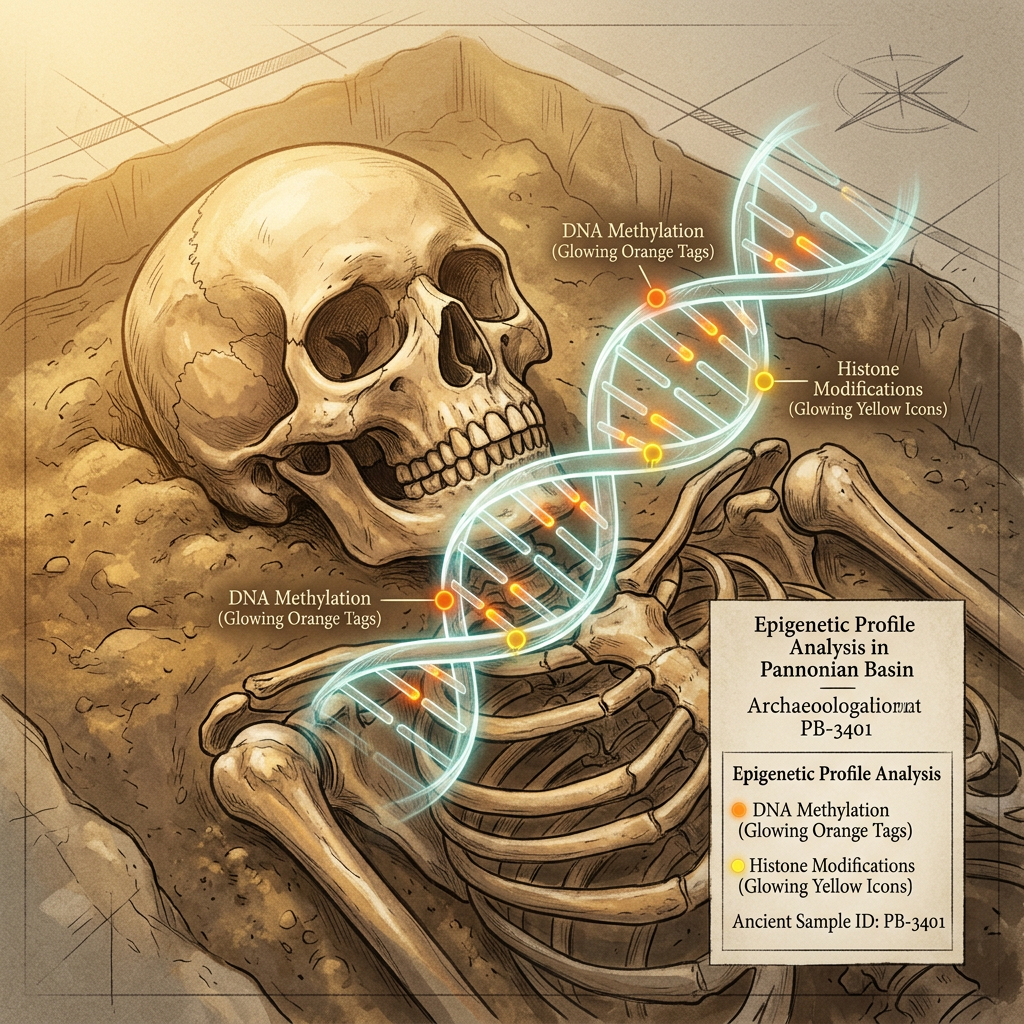
A breakthrough paleogenomic study published in Nature Communications has analyzed 154 human remains from the Pannonian Basin, dating between 6200 and 5400 BCE. The research identifies a previously unknown epigenetic mechanism that allowed early Neolithic farmers to process dairy long before the widespread genetic mutation for lactase persistence became dominant in Europe.
By analyzing DNA methylation patterns, the international team discovered that these populations exhibited unique adaptations in the regulatory regions of the LCT gene. This finding suggests that cultural practices of dairy consumption exerted an immediate pressure on the human genome, triggering cellular-level adaptations that preceded permanent structural genetic changes. The study also maps the migration of these early dairying groups through the Danube corridor, providing a more nuanced view of the Neolithic transition.