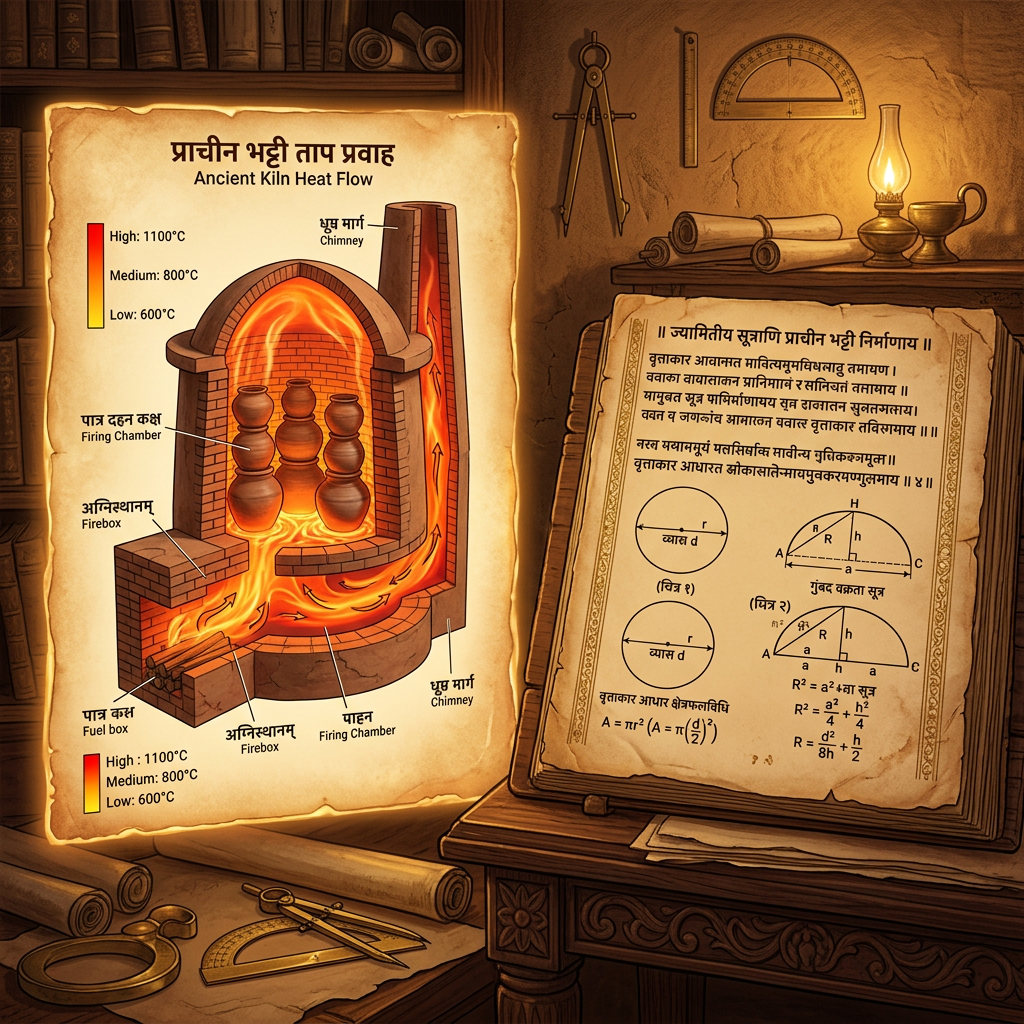
A computational study led by the Indian Institute of Science has analyzed the mathematical structures within the 10th-century treatise Ganita-Tilaka by Sripati. The research identifies a series of iterative algorithms designed to model non-linear heat distribution within high-temperature brick kilns used for sacred architecture.
These mathematical proofs demonstrate that medieval Indian mathematicians had developed geometric series to calculate the cooling rates of large masses of refractory clay. By applying these algorithms to modern thermal simulations, researchers found that the resulting models align perfectly with the structural integrity requirements of the massive temple foundations built during the Chandela and Paramara periods. This highlights the deep integration of advanced mathematics into the practical engineering of the time.