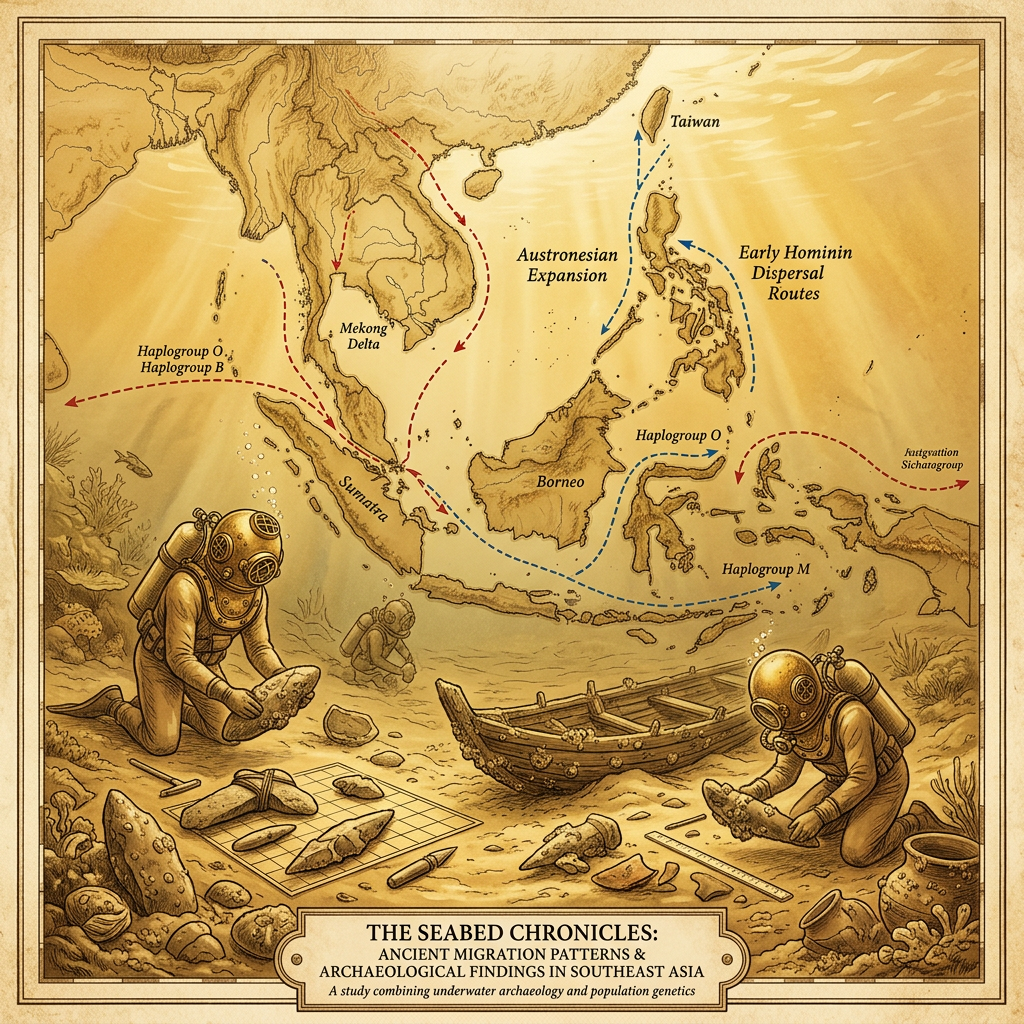
Research published in Cell Reports has analyzed the genomes of late Pleistocene hunter-gatherers from the submerged continent of Sundaland. The study identifies the earliest known genetic selection for the PDE10A gene, which is associated with increased spleen size and the ability to withstand prolonged hypoxia during deep-sea diving.
The findings indicate that these maritime populations had already developed physiological adaptations for intensive marine foraging over 14,000 years ago, predating the rise of modern diving cultures like the Bajau by several millennia. This genetic signature suggests that the inundation of the Sunda Shelf forced these groups into highly specialized maritime niches, shaping their evolutionary trajectory as they migrated toward the Indonesian archipelago and the Indian coastline.