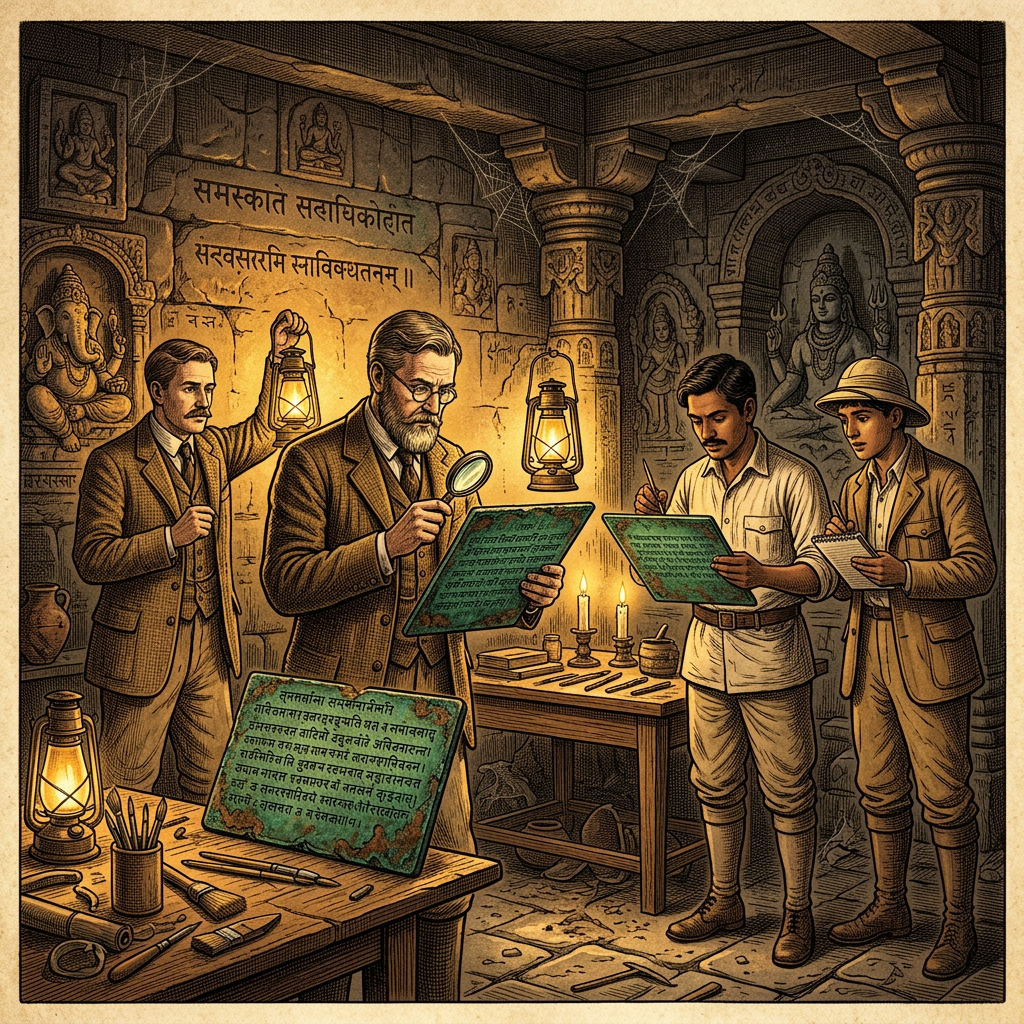
During a state-funded restoration of a crumbling Vesara-style Shiva temple in rural Dharwad, conservationists discovered a sealed stone chamber beneath the Garbhagriha. Inside, they found a hoard of five inscribed copper plates belonging to the Seuna (Yadava) Dynasty. The inscriptions date back to the early 12th century and detail a royal land grant specifically intended for the maintenance of the temple’s unique 'floating' stone ceiling.
The restoration project has now shifted focus to the shikhara, which incorporates architectural elements from both the Nagara and Dravida traditions. Experts believe these copper plates provide critical evidence of the Seuna kings' patronage in the northern Karnataka region, filling a historical gap in the transition from Western Chalukyan to Seuna architectural dominance.