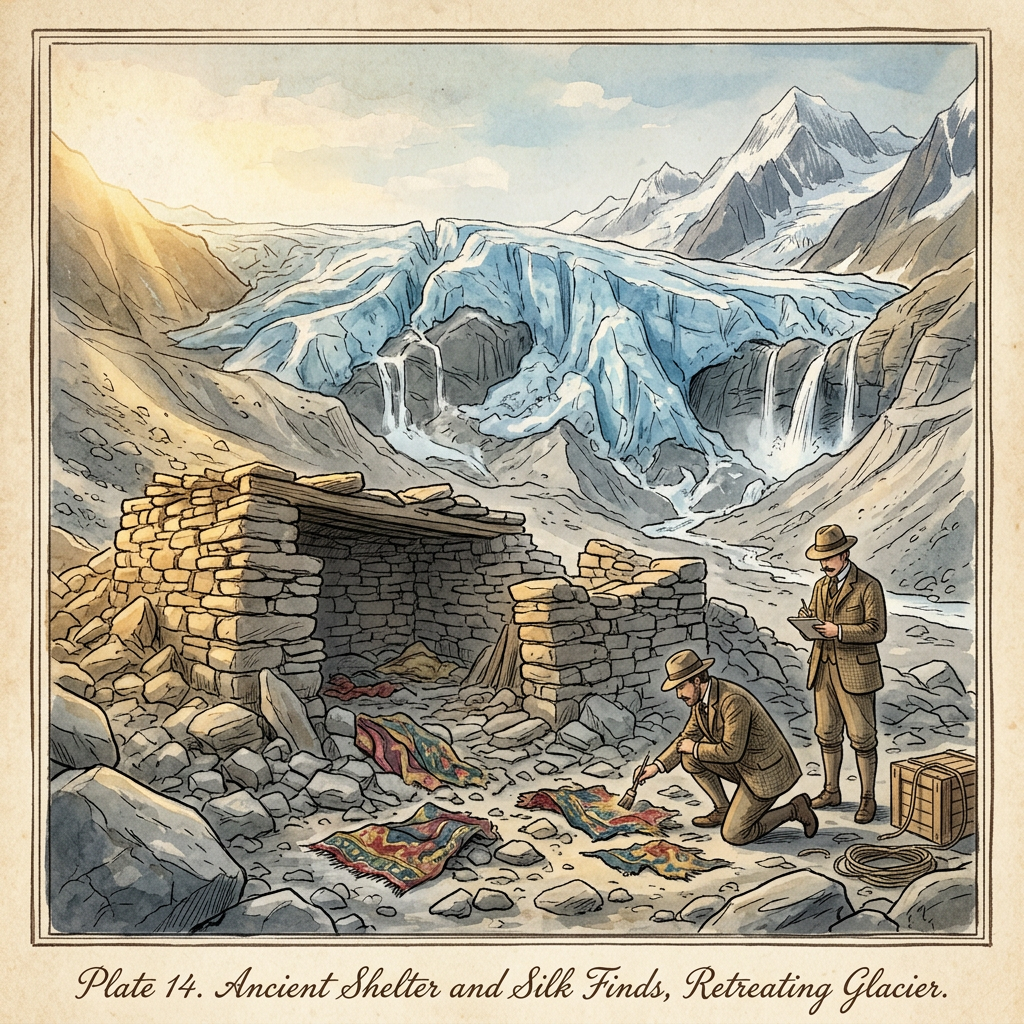
Rapidly melting ice in the Tien Shan mountains of Kyrgyzstan has exposed a perfectly preserved Sogdian-era high-altitude shelter. The structure, located at an elevation of 4,200 meters, served as a vital rest stop for traders navigating the most perilous sections of the Silk Road. Inside the shelter, archaeologists discovered a cache of organic materials, including intact leather boots, wooden pack-saddles, and remarkably vibrant silk textiles with Sasanian-style motifs.
The low-oxygen, sub-zero environment of the glacier acted as a natural time capsule, preventing the decay of items that usually vanish from the archaeological record. Preliminary carbon dating places the occupation of the site between 150 and 300 CE. This discovery provides unprecedented insights into the logistics of ancient high-altitude travel and the specific clothing used by Sogdian merchants to survive the extreme conditions of the central Asian mountain passes.