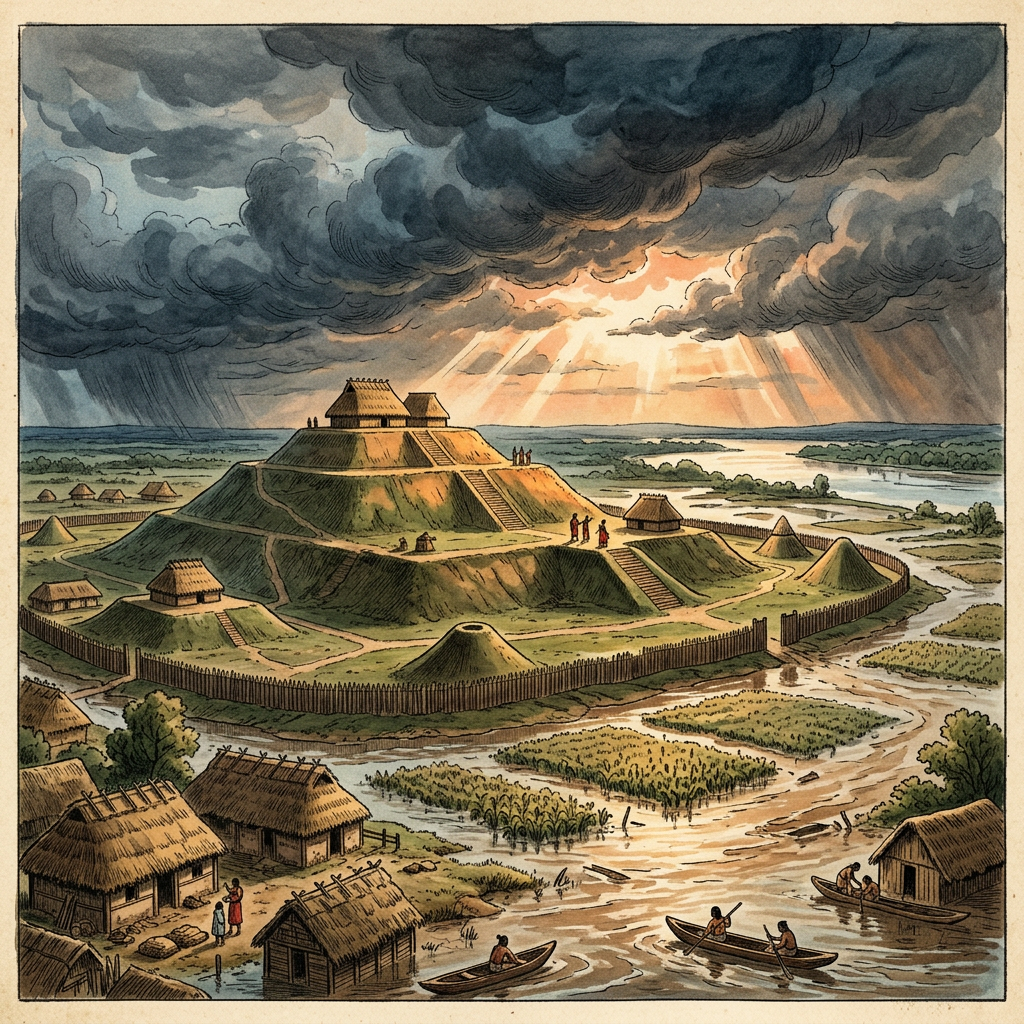
New research into fossilized tree rings from submerged bald cypress forests in the Mississippi River Basin has provided a definitive climate link to the decline of Cahokia, North America's largest pre-Columbian city. The data reveals a series of unprecedented 'mega-floods' occurring between 1150 and 1200 CE, which likely devastated the city's agricultural base and critical corn-storage infrastructure.
Environmental historians suggest that these extreme weather events, triggered by shifting Pacific oscillation patterns, led to widespread social unrest and the eventual dispersal of the city's population. This climate archaeology breakthrough offers a cautionary tale regarding the vulnerability of complex urban centers to sudden environmental shifts.