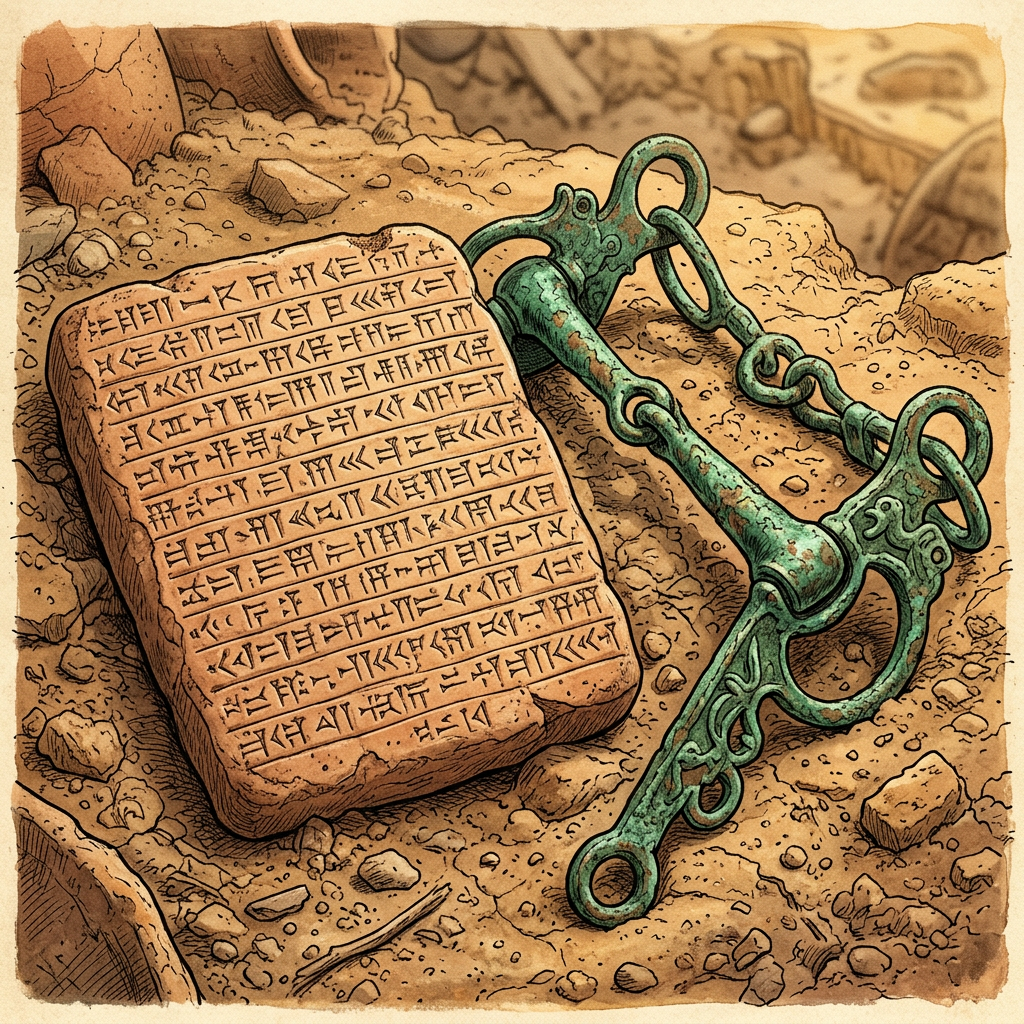
Excavations in the ancient Mesopotamian city of Larsa have uncovered a significant cuneiform archive belonging to the 'Master of the Royal Chariot-Stables'. The tablets, which date back 4,000 years, detail the breeding programs, training schedules, and feed requirements for the elite warhorses used by the kings of the Larsa Dynasty. This find is the first to document the administrative complexity of managing a royal cavalry unit in the early 2nd millennium BCE.
Alongside the tablets, archaeologists discovered a set of bronze bit-templates and casting molds, providing physical evidence of the standardized equipment used for the kingdom's military transport. The archive also contains correspondence regarding the import of high-quality stallions from the northern mountains, revealing a sophisticated international network of equine trade that pre-dates the height of the Assyrian Empire by several centuries.