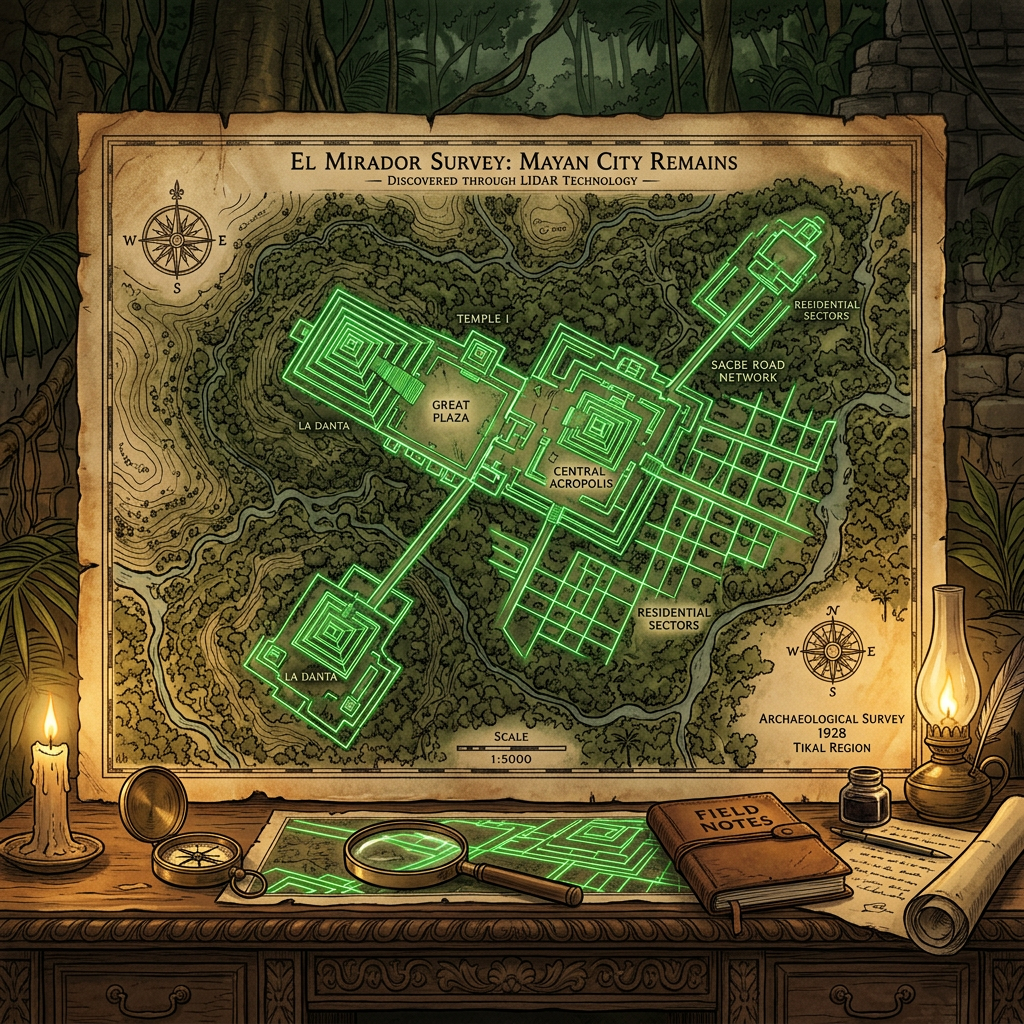
New LiDAR (Light Detection and Ranging) surveys over the dense rainforests of the Mosquitia region in Honduras have revealed a previously unknown urban center spanning over five square kilometers. The mapping shows an intricate grid of volcanic-stone foundations, elevated causeways, and a unique concentric plaza system that suggests the site served as a major Nahua trade enclave connecting the highlands of Mexico with the Caribbean coast.
The city's architecture differs significantly from neighboring Maya sites, utilizing massive basalt blocks for its defensive walls and ceremonial platforms. Researchers believe the site, nicknamed 'The Obsidian Citadel,' was a strategic hub for the exchange of volcanic glass, macaw feathers, and cacao. The LiDAR data also identified a sophisticated terraced agricultural system capable of supporting a population of tens of thousands in the heart of the jungle.