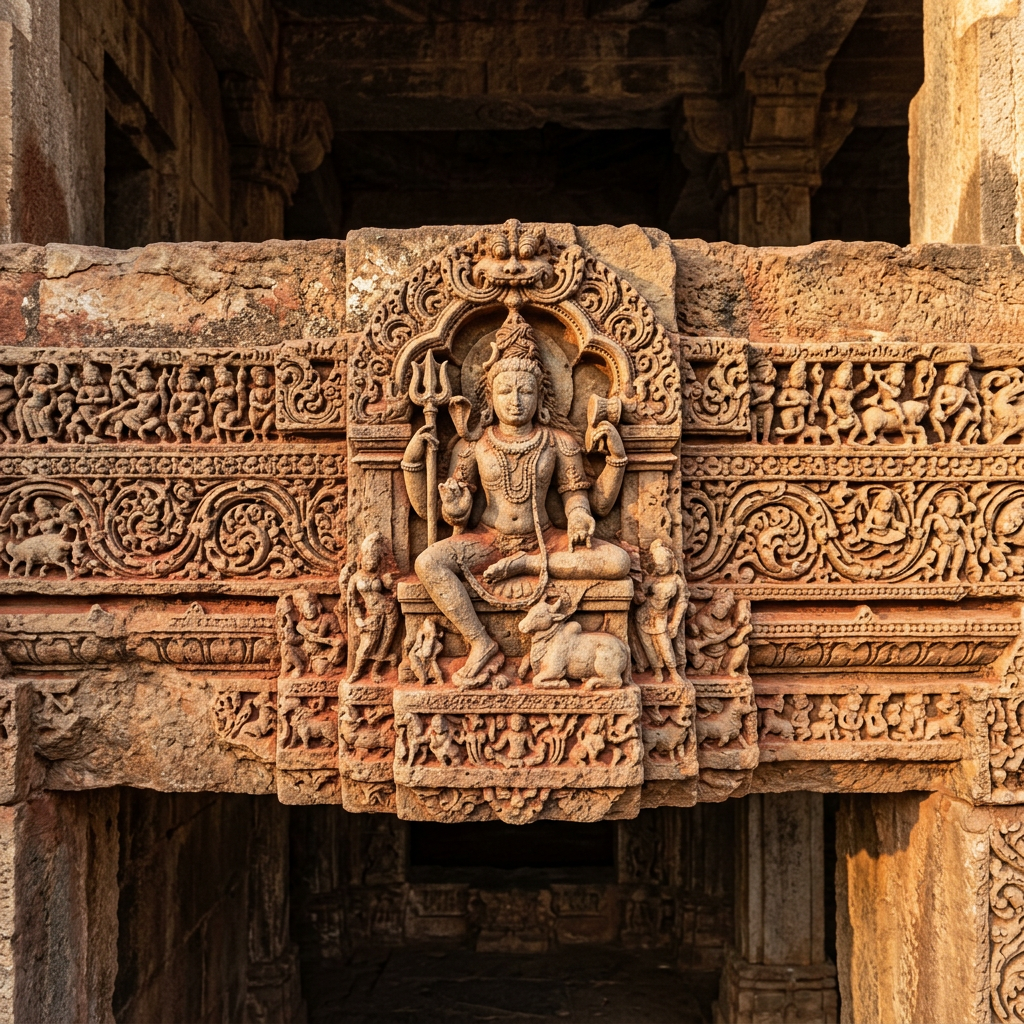
Archaeologists in Sagar district, Madhya Pradesh, have unearthed a significant structural temple dating back to the late 6th century. This site is being hailed as a critical missing link in the architectural transition between the Vakataka and Gupta dynasties. The temple features a square sanctum with a rare, intact lintel depicting a multifaceted Shiva in his Maheshwara form, surrounded by celestial attendants.
The most remarkable finding within the complex is a series of polychrome stucco reliefs that have survived nearly 1,500 years due to being buried under a dense layer of alluvial silt. These reliefs provide unprecedented insight into the early development of North Indian temple iconography, specifically the evolution of the shikhara (tower) from a flat-roofed structure to a stepped pyramidal form. Preservation teams are currently working to stabilize the delicate plasterwork before monsoon rains arrive.