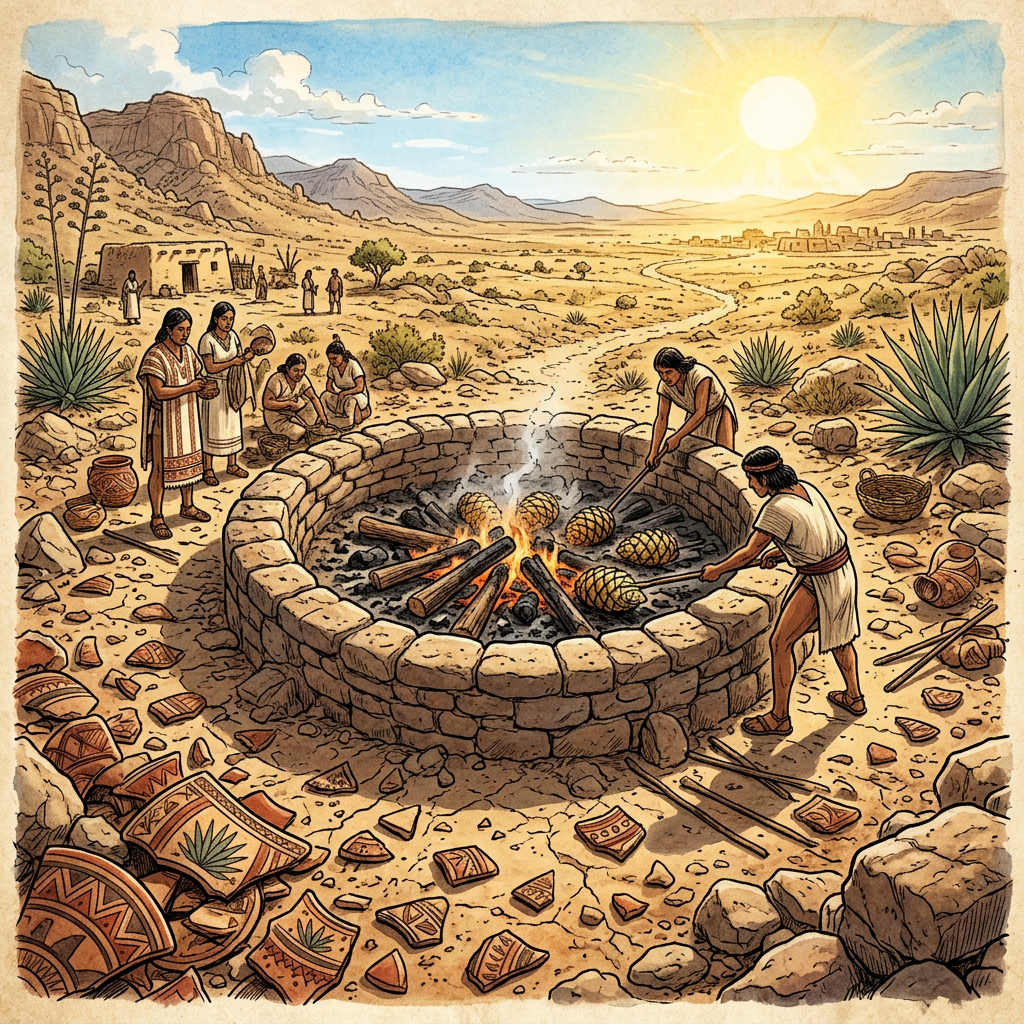
Archaeologists working in the Tequila Valley of Jalisco, Mexico, have unearthed a series of monumental stone-lined roasting pits dating back to approximately 500 CE. These excavations suggest that the production of fermented agave beverages—precursors to modern mezcal and tequila—was central to large-scale communal festivals long before the arrival of Spanish colonists. The presence of ceremonial ceramic vessels decorated with agave-leaf motifs near the pits indicates that these gatherings were deeply ritualized events, likely tied to the agricultural calendar and the propitiation of fertility deities.
Chemical analysis of the residue found within the pits confirmed the presence of cooked agave sugars, while the surrounding area yielded evidence of high-status feasting, including the remains of local game and specialized serving platters. This discovery provides the first physical evidence linking the systematic roasting of agave to organized ritual celebrations in West Mexico, highlighting the deep cultural heritage of the region's most famous tradition. Researchers believe these festivals served to unify disparate groups through shared spiritual and sensory experiences.