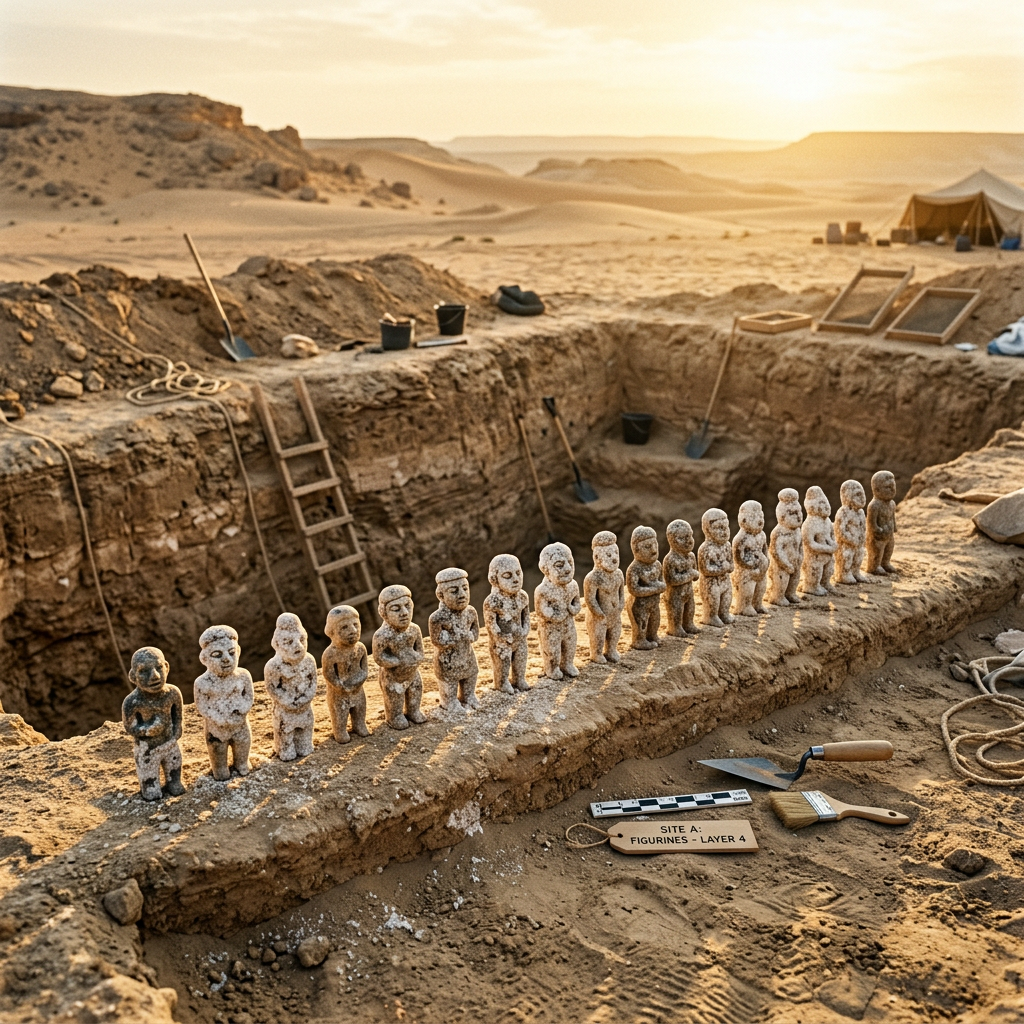
A recent expedition in the remote Libyan desert has discovered a shrine filled with salt-encrusted figurines. These votive statues, dating to the 3rd century AD, were found near an ancient dry lake bed known for its high-quality salt deposits. Researchers believe these were offerings for a forgotten festival celebrating the seasonal harvest of salt, a vital commodity for trade and preservation.
The statues represent various deities and local leaders, preserved perfectly by the saline environment. This finding sheds light on the cultural heritage of indigenous Berber groups and their religious connection to the harsh desert landscape, where mineral resources were treated with the same reverence as water.