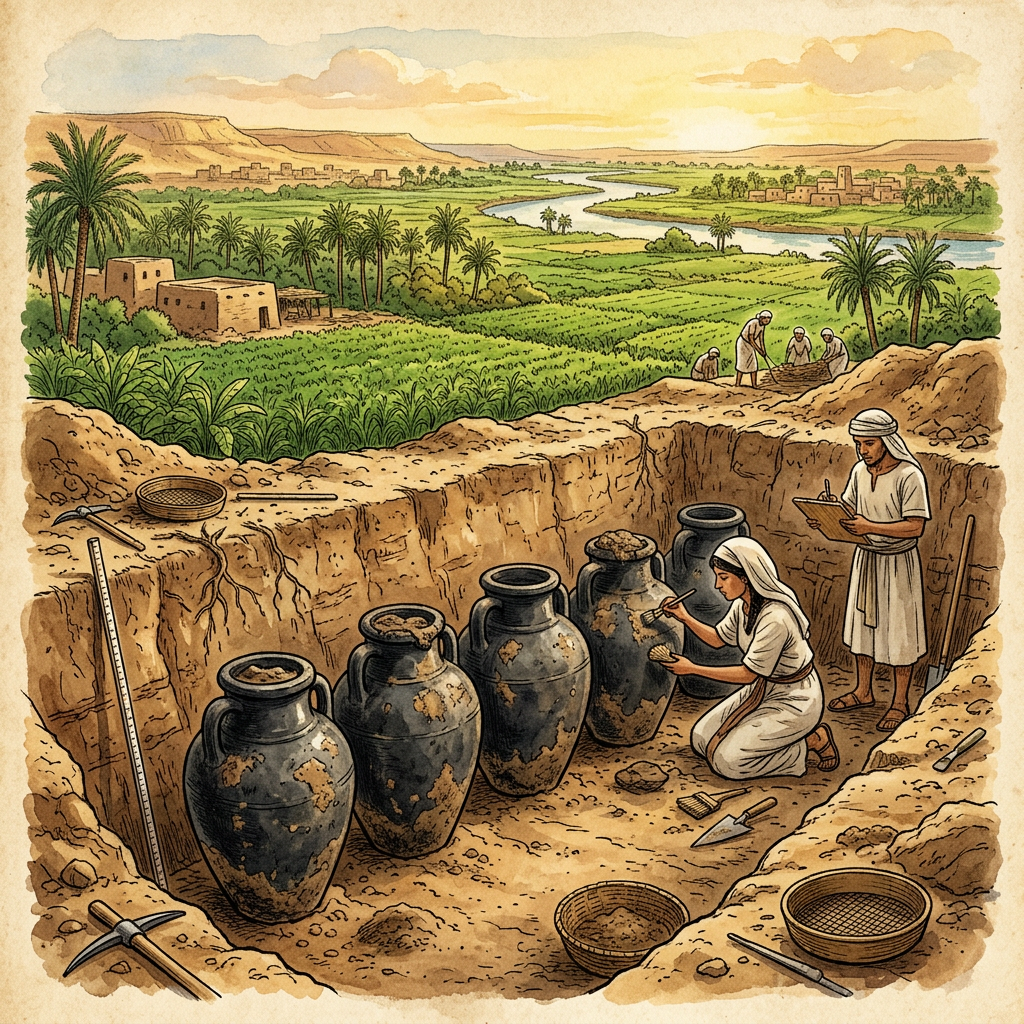
Near the site of ancient Sais, archaeologists have located a deposit of bitumen-sealed jars containing organic remains of Nile silt and dried lotus flowers. These jars, dating to the 4th millennium BC, appear to have been part of a ritual ceremony used to forecast the annual flooding of the river. The bitumen seal ensured the contents remained uncontaminated for a year-long cycle.
This discovery provides evidence for the earliest known iterations of the 'Wepet Renpet' or New Year festival. By preserving samples of the floodwater, pre-dynastic Egyptians were able to compare seasonal changes, turning an environmental necessity into a foundational religious celebration that would persist for thousands of years.